
What Is Respite Care? How Short-Term Care Supports Families and Older Adults

Caring for a loved one can be rewarding, but it can also be physically, emotionally and mentally demanding. Whether you are supporting an ageing parent, a partner living with dementia or a family member recovering from illness, providing ongoing care often leaves little time to focus on your own wellbeing.

This is where respite care can help.

Respite care provides short-term support for the person receiving care while giving family carers an opportunity to rest, attend appointments, take a holiday or simply recharge. It can last for a few hours, several days or several weeks depending on individual circumstances.

Understanding how respite care works can help families make informed decisions and access support before reaching a crisis point.

What Is Respite Care?

Respite care is temporary care arranged to support someone who needs assistance with daily living while their usual caregiver takes a break.

The care may be provided in the person’s own home, at a day care service or through a short stay in a care home. During this time, trained professionals provide the support needed to ensure continuity of care and peace of mind for families.

Respite care can be used on a planned basis or arranged in response to unexpected situations such as illness, hospital appointments, family emergencies or recovery after surgery.

For many families, respite care becomes an important part of maintaining a sustainable long-term caring arrangement.

What Does Respite Mean?

The word “respite” means a short period of rest or relief from something demanding.

In a care setting, respite refers to temporary support that allows a caregiver to step away from their responsibilities while ensuring their loved one continues to receive appropriate care and attention.

Although the break may only be for a short period, it can make a significant difference to a caregiver’s wellbeing and ability to continue providing support.

Who Can Benefit From Respite Care?

Respite care can support a wide range of individuals and families.

It is often used by:

  • Older adults who require assistance with daily activities
  • People living with dementia
  • Individuals recovering after illness or hospital treatment
  • People with physical disabilities
  • Families providing regular unpaid care
  • Carers who need time to rest, travel or manage personal commitments

Many carers wait until they feel overwhelmed before seeking support. However, respite care is often most effective when introduced before caring responsibilities begin to impact physical or emotional health.

How Does Respite Care Work?

There are several ways respite care can be provided depending on individual needs.

Home-Based Respite Care

A professional carer visits the person’s home and provides support while the primary caregiver takes time away.

This option allows the individual to remain in familiar surroundings while receiving assistance with personal care, meals, medication or companionship.

Day Care Services

Some people attend day centres that offer social activities, meals and support during the day.

This provides an opportunity for social interaction while giving carers regular breaks throughout the week.

Residential Respite Care

Residential respite care involves a temporary stay within a care home where trained staff provide support around the clock.

For families looking for short-term support, specialist respite care homes in the UK can provide a safe and comfortable environment while carers take a well-deserved break. Stays can range from a few days to several weeks depending on individual requirements.

What Happens During a Respite Care Stay?

Many families are unsure what to expect when arranging respite care for the first time.

During a respite stay, individuals receive the same level of support as permanent residents. Depending on their needs, this may include:

  • Personal care and hygiene support
  • Medication management
  • Assistance with mobility
  • Nutritious meals and refreshments
  • Social activities and companionship
  • Dementia care support
  • Overnight supervision where required

A respite stay also allows individuals to become familiar with a care home environment, which can be reassuring if longer-term care is considered in the future.

Benefits of Respite Care for Family Caregivers

Providing care for a loved one can be emotionally rewarding, but it can also lead to stress, fatigue and burnout when support is limited.

Regular respite care can help carers:

  • Rest and recharge
  • Focus on their own health and wellbeing
  • Attend appointments and personal commitments
  • Spend time with other family members
  • Reduce stress and anxiety
  • Maintain a healthier work-life-care balance

Taking a break is not a sign that a caregiver is unable to cope. In many cases, it helps carers continue providing support more effectively over the long term.

Respite Care for Older Adults

Older adults may require temporary care support for a variety of reasons.

This may include:

  • Recovery after hospital treatment
  • Additional support following illness
  • Assistance while family members are away
  • Social engagement and companionship
  • Trial stays before considering long-term care

Many families choose a short respite stay before deciding whether a permanent move into a residential care home in the UK may be the right option for their loved one. Experiencing daily life within a care setting can help families make informed decisions about future care needs.

Respite Care for People Living With Dementia

Respite care is often used by families supporting a loved one with dementia, particularly when care needs begin to increase or daily routines become more difficult to manage. Understanding the condition and recognising changes early can make it easier to plan the right level of support. If you’re caring for someone living with dementia, our guide to What Is Dementia Care? explains how specialist support can help maintain comfort, safety and independence, while Early Signs of Dementia explores some of the symptoms families commonly notice before seeking professional advice.

How Long Can Respite Care Last?

The length of respite care varies according to individual needs and circumstances.

Type of SupportTypical Duration
Hourly respite careA few hours
Day care servicesOne day
Weekend respite stay2–3 days
Residential respite careSeveral days to several weeks
Emergency respite careAs required

Some families arrange respite care on a regular basis, while others use it occasionally during holidays, illness or periods of increased caring responsibilities.

When Should You Consider Respite Care?

Families often benefit from respite care before reaching a point of exhaustion or burnout.

You may wish to consider respite care if:

  • Caring responsibilities are becoming difficult to manage alone
  • You need time to recover from illness
  • You are planning a holiday or family event
  • Your loved one has recently left hospital
  • You need support during an emergency situation
  • The person you care for requires increasing levels of assistance

Seeking support early often provides more options and allows families to make decisions without unnecessary pressure.

Choosing the Right Respite Care Service

Finding the right respite care provider is an important decision.

When comparing services, consider:

  • Staff experience and qualifications
  • Availability of specialist dementia care
  • Quality ratings and inspections
  • Activities and social opportunities
  • Accommodation and facilities
  • Communication with families
  • Individualised care planning

Visiting a care home before arranging a respite stay can help families feel more confident about the support being provided.

Is Respite Care the Same as Residential Care?

No.

Respite care is designed as a temporary arrangement, while residential care provides ongoing long-term support.

However, respite care can offer a valuable introduction to life within a care home and help families understand whether a more permanent care solution may be appropriate in the future.

When to Seek Professional Advice

If caring responsibilities are beginning to affect your health, wellbeing or ability to provide support, it may be time to explore additional care options.

Speaking with healthcare professionals or experienced care providers can help families understand what support is available and identify the most suitable care arrangements for their circumstances.

Respite care can provide valuable support for both caregivers and the people they care for, helping families maintain balance while ensuring loved ones continue to receive the care and attention they need.
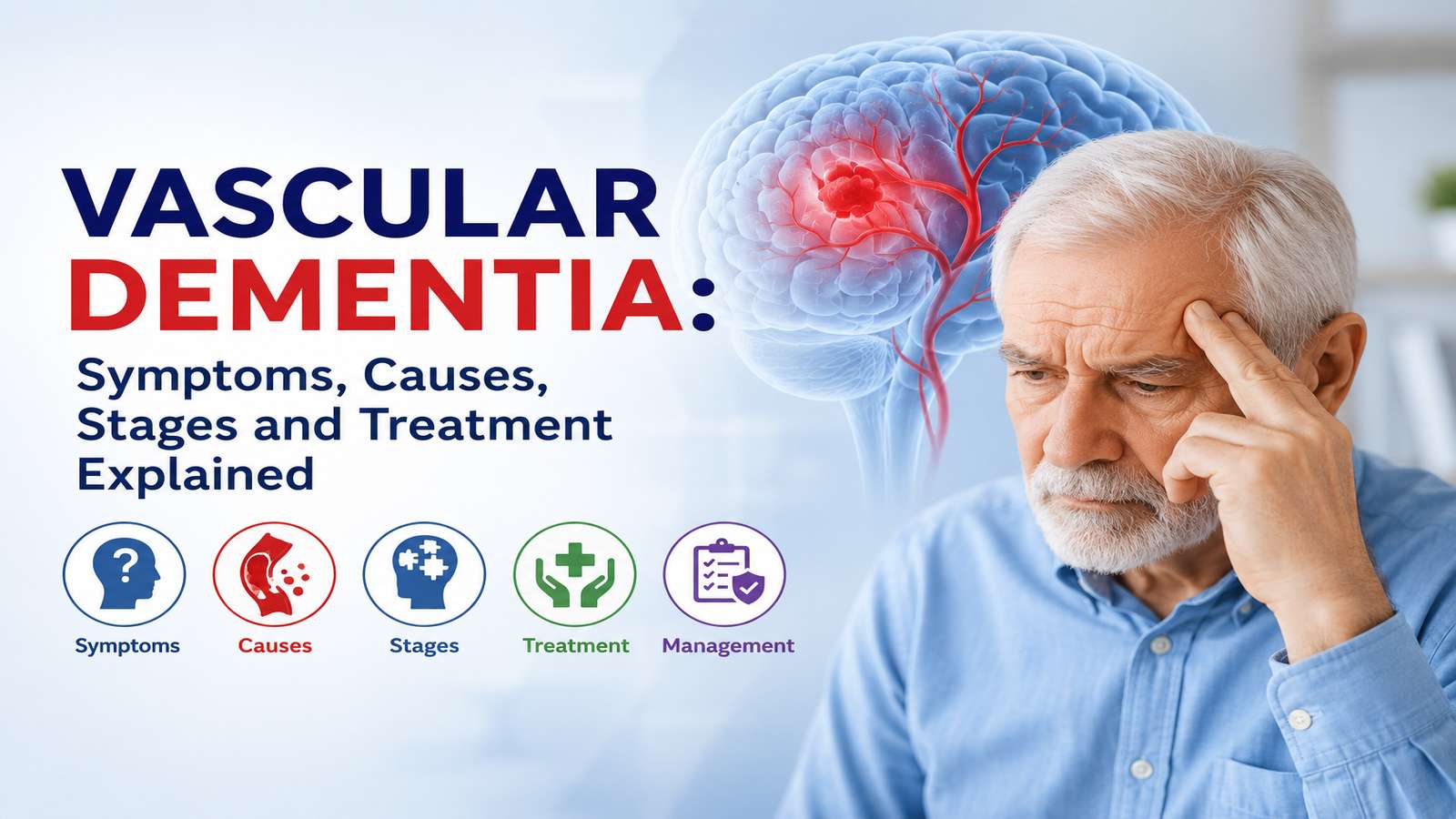
Vascular Dementia: Symptoms, Causes, Stages and Treatment Explained

Vascular dementia is the second most common type of dementia after Alzheimer’s disease. It develops when reduced blood flow damages parts of the brain responsible for memory, thinking, reasoning and everyday functioning.

Unlike some other forms of dementia, vascular dementia is closely linked to conditions that affect blood vessels, such as stroke, high blood pressure, heart disease and diabetes. Symptoms can vary significantly from person to person depending on which areas of the brain are affected.

Understanding the causes, symptoms and progression of vascular dementia can help individuals and families seek support early and make informed decisions about future care.

What Is Vascular Dementia?

Vascular dementia is a condition caused by reduced blood flow to the brain. When brain cells do not receive enough oxygen and nutrients, they can become damaged or die, leading to problems with memory, thinking, communication and decision-making.

The condition may develop suddenly after a stroke or gradually over time due to damage to small blood vessels within the brain.

Although vascular dementia is a distinct condition, some people have both vascular dementia and Alzheimer’s disease. This is known as mixed dementia and is particularly common in older adults.

If you are unfamiliar with the broader condition, our guide on dementia care explains how dementia affects daily life and the support available for individuals and families.

What Causes Vascular Dementia?

Vascular dementia occurs when blood flow to the brain becomes impaired. Several underlying health conditions can contribute to this damage.

Common causes include:

  • Stroke
  • Multiple mini-strokes (transient ischaemic attacks)
  • Small vessel disease
  • High blood pressure
  • Heart disease
  • Diabetes
  • High cholesterol
  • Smoking-related vascular damage

In many cases, the damage accumulates over time, meaning symptoms may develop gradually rather than appearing suddenly.

Can a Stroke Cause Dementia?

Yes. A stroke can increase the risk of developing vascular dementia.

When a stroke interrupts blood flow to part of the brain, brain cells may be permanently damaged. Some people experience cognitive changes shortly after a stroke, while others develop symptoms months or years later.

The risk depends on factors such as:

  • The severity of the stroke
  • Which part of the brain was affected
  • Existing vascular health conditions
  • The person’s age and overall health

Not everyone who has a stroke develops dementia, but stroke remains one of the leading risk factors for vascular dementia.

Who Is Most at Risk of Developing Vascular Dementia?

Although vascular dementia can affect adults of different ages, the risk increases significantly as people get older.

Factors that may increase the likelihood of developing vascular dementia include:

  • Being over the age of 65
  • Having high blood pressure
  • Diabetes
  • Cardiovascular disease
  • Previous stroke or mini-stroke
  • Smoking
  • Obesity
  • High cholesterol
  • Lack of physical activity

Managing these risk factors may help reduce the chances of developing vascular dementia or slow further progression.

Early Signs and Symptoms of Vascular Dementia

The symptoms of vascular dementia can differ from those associated with Alzheimer’s disease.

While memory problems can occur, many people first notice difficulties with planning, concentration and decision-making.

Common early signs include:

  • Difficulty organising tasks
  • Problems making decisions
  • Slower thinking speed
  • Reduced concentration
  • Confusion during unfamiliar situations
  • Difficulty following instructions
  • Mood changes
  • Depression or apathy
  • Problems with balance or walking

As the condition progresses, memory loss and communication difficulties often become more noticeable.

Families who are unsure whether changes may be dementia-related may find it helpful to read our guide to the early signs of dementia, which explains symptoms that should not be ignored.

How Is Vascular Dementia Diagnosed?

There is no single test that can diagnose vascular dementia.

Healthcare professionals typically use a combination of assessments, including:

  • Medical history review
  • Cognitive assessments
  • Neurological examinations
  • Blood tests
  • Brain imaging scans such as MRI or CT scans

These assessments help identify whether symptoms are being caused by vascular damage and rule out other potential conditions.

An early diagnosis can help individuals access support, treatment and future care planning sooner.

Stages of Vascular Dementia

Vascular dementia does not follow exactly the same pattern for every individual. However, symptoms are often grouped into three broad stages.

Early Stage Vascular Dementia

During the early stage, symptoms may be mild and sometimes mistaken for normal ageing.

Common signs include:

  • Forgetfulness
  • Reduced concentration
  • Slower thinking
  • Difficulty planning tasks
  • Mild confusion

Many people continue to live independently during this stage.

Middle Stage Vascular Dementia

As the condition progresses, daily activities become more challenging.

Symptoms may include:

  • Increased memory problems
  • Difficulty managing finances
  • Changes in behaviour
  • Communication difficulties
  • Reduced mobility
  • Greater need for support

Family members often begin providing more regular assistance at this stage.

Late Stage Vascular Dementia

In the later stages, individuals may require significant support with everyday living.

Symptoms can include:

  • Severe memory impairment
  • Limited communication
  • Mobility difficulties
  • Increased vulnerability to infections
  • Full-time care requirements

At this stage, specialist dementia support is often necessary to ensure safety, comfort and quality of life.

How Quickly Does Vascular Dementia Progress?

Progression varies significantly between individuals.

Unlike Alzheimer’s disease, which often progresses gradually, vascular dementia may worsen in noticeable steps. This can happen when additional strokes or vascular events occur.

Factors affecting progression include:

  • Overall health
  • Age
  • Severity of vascular damage
  • Management of underlying health conditions
  • Access to appropriate support and care

Some people experience relatively slow progression, while others may decline more rapidly.

Vascular Dementia vs Alzheimer’s Disease

Many people wonder about the difference between vascular dementia and Alzheimer’s disease.

Although both conditions affect memory and thinking, the underlying causes are different.

Vascular DementiaAlzheimer’s Disease
Caused by reduced blood flow to the brainCaused by abnormal protein build-up in the brain
Often linked to stroke and vascular diseaseUsually develops gradually over time
Early symptoms often involve planning and decision-making difficultiesEarly symptoms often involve memory loss
Progression may occur in stagesProgression is generally gradual

Some individuals develop both conditions simultaneously, known as mixed dementia.

Is Vascular Dementia Hereditary?

Most cases of vascular dementia are not directly inherited.

However, some of the conditions that increase vascular dementia risk, such as high blood pressure, heart disease and diabetes, can run in families.

Rare inherited disorders affecting blood vessels may also increase the likelihood of developing vascular dementia, but these cases are uncommon.

Having a family history does not mean someone will definitely develop vascular dementia, but it may increase overall risk.

Treatment for Vascular Dementia

There is currently no cure for vascular dementia.

Treatment focuses on managing symptoms and reducing further damage to blood vessels.

A care plan may include:

  • Medication for blood pressure management
  • Cholesterol-lowering treatment
  • Diabetes management
  • Support for heart conditions
  • Cognitive stimulation activities
  • Physical exercise
  • Occupational therapy
  • Lifestyle changes such as stopping smoking

Managing underlying health conditions can play an important role in slowing progression.

Living Well With Vascular Dementia

Many people continue to enjoy meaningful and fulfilling lives after a vascular dementia diagnosis.

Practical steps that may help include:

  • Maintaining a daily routine
  • Staying physically active
  • Following medical advice
  • Engaging in social activities
  • Using memory aids and reminders
  • Seeking support from family, carers and healthcare professionals

Early planning can also help families prepare for changing care needs over time.

When Might Someone Need Professional Dementia Care?

As vascular dementia progresses, some individuals require additional support that family members may find difficult to provide alone.

Professional care may become appropriate when someone experiences:

  • Frequent confusion or wandering
  • Medication management difficulties
  • Personal care needs
  • Mobility challenges
  • Safety concerns at home
  • Increased supervision requirements

For families exploring longer-term support options, specialist Dementia Care Homes in UK can provide structured environments designed to meet the changing needs of people living with dementia.

Depending on location and individual circumstances, families may also consider Residential Care Homes UK or short-term Respite Care Homes UK when additional support is needed.

The right care option will depend on the person’s health, independence level and personal preferences.

Conclusion

Vascular dementia is a common form of dementia caused by reduced blood flow to the brain. Symptoms can affect memory, concentration, decision-making and daily functioning, but experiences vary considerably between individuals.

Recognising the early signs, understanding risk factors and seeking medical advice promptly can help individuals access the support and care they need sooner.

Although there is currently no cure, appropriate treatment, lifestyle management and specialist support can help many people maintain their quality of life and independence for as long as possible.

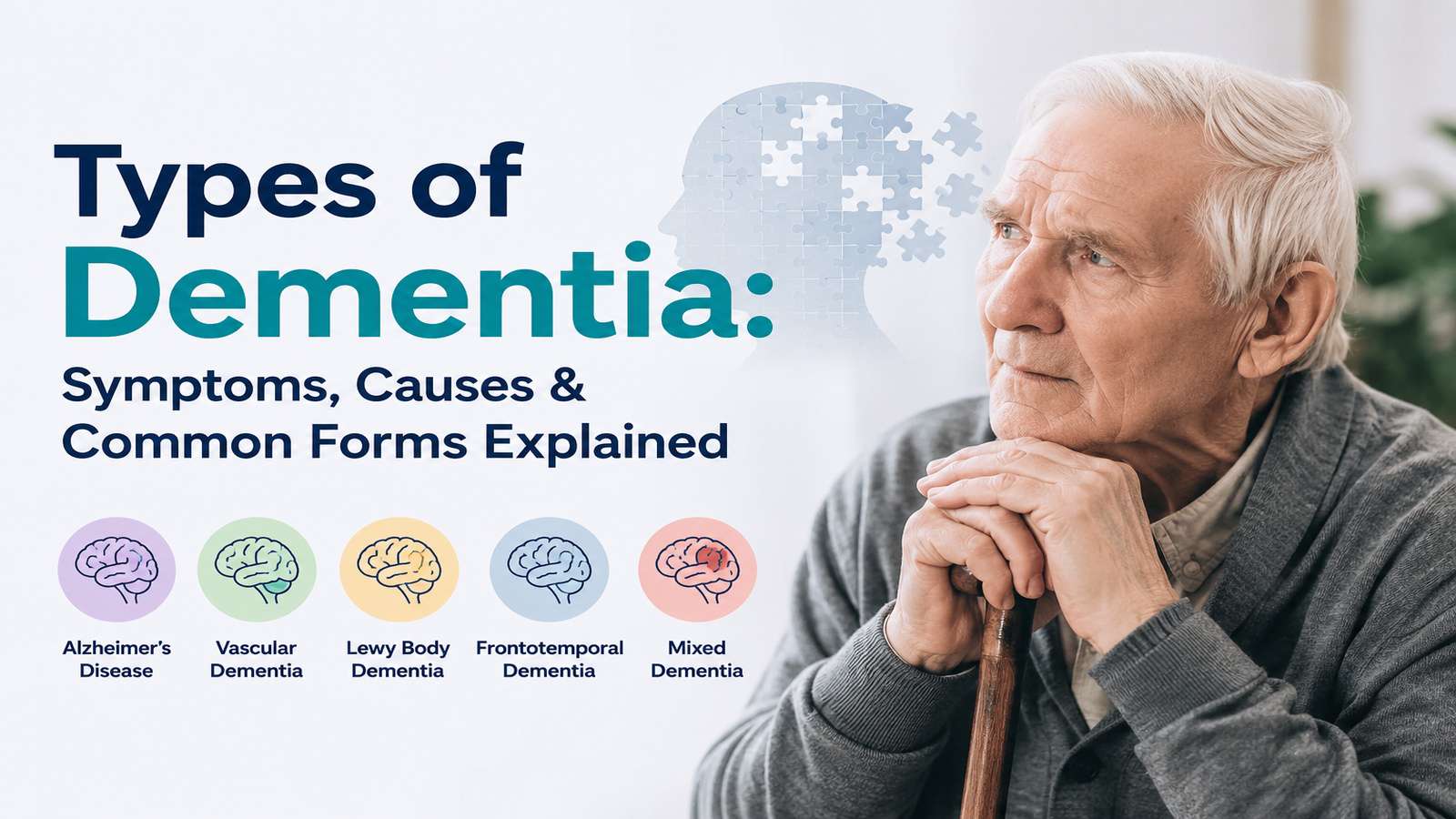
Types of Dementia: Understanding the Different Forms, Symptoms and Causes

Dementia is not a single disease. It is a broad term used to describe a group of symptoms that affect memory, thinking, communication, behaviour and the ability to carry out everyday activities.

Many people assume dementia is simply another name for Alzheimer’s disease, but Alzheimer’s is just one of several different types of dementia. Each type affects the brain differently, can cause different symptoms and may progress at different rates.

Understanding the different forms of dementia can help individuals and families recognise symptoms earlier, seek appropriate medical advice and make informed decisions about future care and support.

What Is Dementia?

Dementia is an umbrella term for a collection of symptoms caused by damage to brain cells. These symptoms can affect:

  • Memory
  • Problem-solving abilities
  • Language and communication
  • Judgement and decision-making
  • Mood and behaviour
  • Spatial awareness

Dementia is not a normal part of ageing. While age is the biggest risk factor, dementia develops because of underlying conditions that affect the brain.

For many families, recognising the symptoms early is the first step towards obtaining a diagnosis and accessing support. If you are concerned about memory loss or behavioural changes, our guide to what dementia care is and how it helps provides useful information about support options available to individuals living with dementia.

How Many Types of Dementia Are There?

People often ask, “How many types of dementia are there?”

There are more than 100 conditions that can cause dementia symptoms. However, most diagnoses fall into four main categories:

Main TypeEstimated Prevalence
Alzheimer’s diseaseMost common
Vascular dementiaSecond most common
Dementia with Lewy bodiesCommon
Frontotemporal dementiaLess common

Alongside these major forms, there are several other dementia types, including mixed dementia, Parkinson’s disease dementia and a number of rarer neurological conditions.

Some sources refer to the “12 types of dementia” when grouping together the most frequently diagnosed forms, but there is no universally accepted list of exactly 12 dementia types.

The 4 Main Types of Dementia

Type of DementiaCommon SymptomsTypical Age Group
Alzheimer’s diseaseMemory loss, confusion, disorientationUsually over 65
Vascular dementiaSlower thinking, concentration difficulties, planning problemsUsually over 65
Dementia with Lewy bodiesHallucinations, movement issues, sleep disturbancesUsually over 65
Frontotemporal dementiaPersonality and behaviour changes, language difficultiesOften 45–65

These four conditions account for the majority of dementia diagnoses in the UK.

Alzheimer’s Disease

Alzheimer’s disease is the most common type of dementia, accounting for around two-thirds of dementia cases.

The condition develops when abnormal proteins build up in the brain, damaging nerve cells and disrupting communication between different areas of the brain.

Early Symptoms of Alzheimer’s Disease

Common early signs include:

  • Forgetting recent conversations
  • Misplacing items frequently
  • Repeating questions
  • Difficulty finding words
  • Becoming confused about dates or locations

As Alzheimer’s progresses, symptoms become more severe and may affect mobility, communication and personal care.

Families often first notice subtle changes that can easily be mistaken for normal ageing. Learning about the early signs of dementia can help people identify potential concerns sooner and seek medical advice if necessary.

Vascular Dementia

Vascular dementia occurs when blood flow to the brain becomes reduced, often because of strokes or damage to blood vessels.

Unlike Alzheimer’s disease, memory loss is not always the first symptom.

Symptoms of Vascular Dementia

People may experience:

  • Slower thinking
  • Difficulty concentrating
  • Problems with planning and organisation
  • Reduced decision-making ability
  • Mood changes

Symptoms can appear suddenly after a stroke or develop gradually over time.

Because vascular dementia is linked to cardiovascular health, managing blood pressure, diabetes and cholesterol can play an important role in reducing risk.

Dementia with Lewy Bodies

Dementia with Lewy bodies, often called Lewy body dementia, is caused by abnormal protein deposits known as Lewy bodies forming within the brain.

It shares characteristics with both Alzheimer’s disease and Parkinson’s disease.

Common Symptoms

People may experience:

  • Visual hallucinations
  • Fluctuating alertness
  • Sleep disturbances
  • Movement difficulties
  • Muscle stiffness
  • Balance problems

Symptoms can vary significantly from day to day, making diagnosis challenging in some cases.

Frontotemporal Dementia (FTD)

Frontotemporal dementia affects the frontal and temporal lobes of the brain.

Unlike Alzheimer’s disease, it often develops at a younger age and commonly affects people between 45 and 65.

Symptoms of Frontotemporal Dementia

Common symptoms include:

  • Personality changes
  • Socially inappropriate behaviour
  • Loss of empathy
  • Language difficulties
  • Reduced motivation
  • Impulsive actions

Frontotemporal dementia is sometimes referred to as frontal lobe dementia, and some forms were previously known as Pick’s disease.

Because symptoms often begin with behavioural changes rather than memory loss, diagnosis can sometimes be delayed.

Young-Onset Dementia

Young-onset dementia, also called early-onset dementia, refers to dementia diagnosed before the age of 65.

Although less common than later-life dementia, it can present unique challenges because individuals may still be working, raising families or managing financial commitments.

Several dementia types can occur as young-onset dementia, including:

  • Alzheimer’s disease
  • Frontotemporal dementia
  • Vascular dementia
  • Dementia with Lewy bodies

Early diagnosis can help families access specialist support and plan for future care needs.

Mixed Dementia

Mixed dementia occurs when a person has more than one dementia-related condition affecting the brain simultaneously.

The most common combination is:

  • Alzheimer’s disease and vascular dementia

Because multiple conditions are involved, symptoms can vary widely between individuals.

Mixed dementia is increasingly recognised as one of the more common dementia diagnoses, particularly in older adults.

Parkinson’s Disease Dementia

Some people living with Parkinson’s disease later develop dementia symptoms.

Parkinson’s disease dementia can affect:

  • Memory
  • Attention
  • Decision-making
  • Visual processing
  • Communication

Movement symptoms such as tremors and stiffness usually appear before cognitive symptoms develop.

While Parkinson’s disease dementia and dementia with Lewy bodies share similarities, they are classified differently based on when symptoms first appear.

Mild Cognitive Impairment (MCI): Is It Dementia?

Mild cognitive impairment (MCI) is not dementia.

People with MCI experience noticeable changes in memory or thinking, but these changes are not severe enough to significantly affect daily life.

Mild Cognitive Impairment vs Dementia

Mild Cognitive ImpairmentDementia
Symptoms are mildSymptoms interfere with daily activities
Greater independence maintainedIncreased support often required
Not everyone progresses to dementiaDementia symptoms generally worsen over time

Some people with MCI eventually develop dementia, while others remain stable for many years.

Rarer Types of Dementia

Although less common, several rare neurological conditions can cause dementia symptoms.

Posterior Cortical Atrophy (PCA)

Affects visual processing and spatial awareness.

Corticobasal Syndrome (CBS)

Can cause movement difficulties alongside cognitive decline.

CADASIL

A rare inherited disorder affecting blood vessels in the brain.

Creutzfeldt-Jakob Disease (CJD)

A rapidly progressive neurological condition.

Progressive Supranuclear Palsy (PSP)

Affects balance, movement and cognition.

Huntington’s Disease

An inherited condition that can lead to dementia symptoms later in life.

These conditions are much less common than Alzheimer’s disease or vascular dementia but may require specialist diagnosis and support.

Which Type of Dementia Is Most Common?

Alzheimer’s disease is the most common type of dementia worldwide and in the UK.

It accounts for the majority of dementia diagnoses and is often what people think of when they hear the word dementia.

The most common dementia types are:

  1. Alzheimer’s disease
  2. Vascular dementia
  3. Dementia with Lewy bodies
  4. Frontotemporal dementia
  5. Mixed dementia

Understanding which type of dementia a person has can help guide treatment, support planning and long-term care decisions.

Do Different Types of Dementia Have Different Symptoms?

Yes. While there is overlap between dementia types, symptoms can vary considerably.

Dementia TypeKey Symptoms
Alzheimer’s diseaseMemory loss, confusion
Vascular dementiaPlanning and concentration difficulties
Lewy body dementiaHallucinations and movement issues
Frontotemporal dementiaPersonality and behavioural changes
Parkinson’s disease dementiaMovement and cognitive difficulties

Because symptoms differ, obtaining an accurate diagnosis is important.

When Should You Seek Medical Advice?

Occasional forgetfulness can be a normal part of ageing. However, persistent changes in memory, thinking, behaviour or communication should not be ignored.

Consider seeking medical advice if someone is:

  • Frequently forgetting important information
  • Becoming confused in familiar places
  • Struggling with everyday tasks
  • Experiencing significant personality changes
  • Having difficulty communicating

Early diagnosis can provide access to treatment, support services and future care planning.

For families exploring long-term support options, specialist Dementia Care Homes in UK services can provide structured care, personalised support and safe environments designed around the needs of people living with dementia.

Supporting Someone Living With Dementia

Every person’s experience of dementia is unique. While symptoms and progression vary, timely support can make a significant difference to quality of life.

Whether someone is living independently, receiving support at home or considering residential care, understanding the type of dementia involved can help families make informed decisions about treatment, care planning and daily support.

As dementia progresses, some individuals may benefit from specialist residential care where trained staff can provide personalised assistance, structured routines and dementia-friendly environments tailored to changing needs.