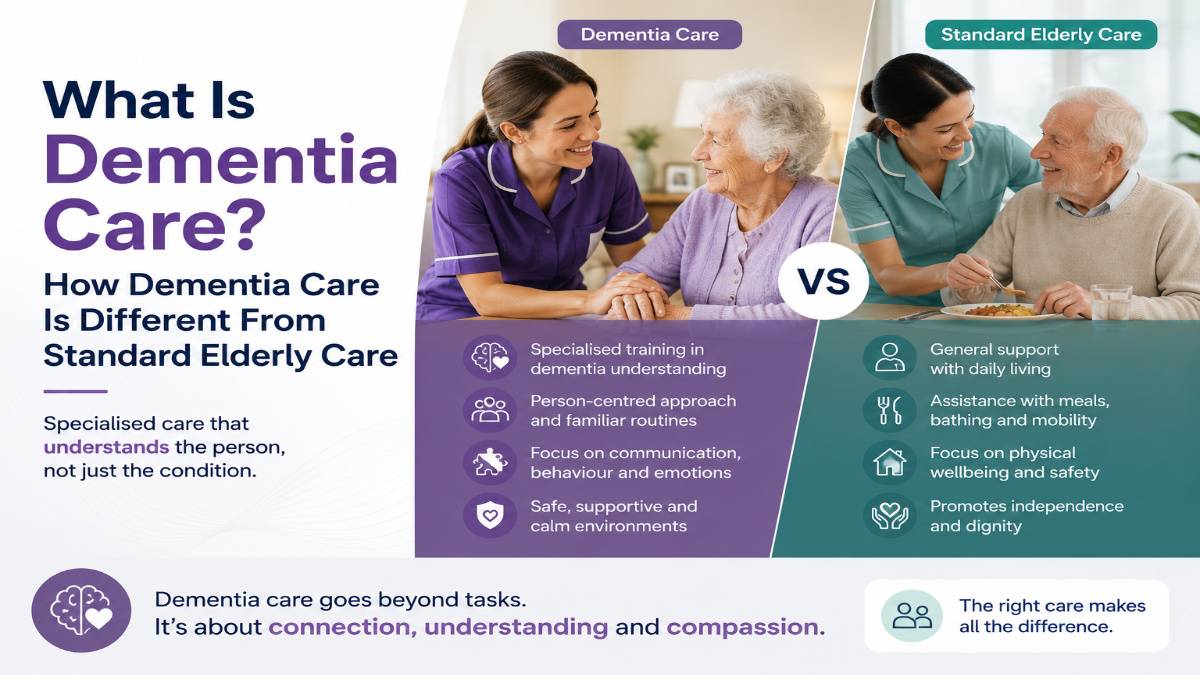
Dementia care is specialist support designed for people living with dementia, including conditions such as Alzheimer’s disease, vascular dementia, and Lewy body dementia.
Unlike standard elderly care, dementia care focuses not only on physical support but also on memory, behaviour, communication, safety, and emotional wellbeing.
As dementia progresses, many people need increasing levels of supervision and structured support to remain safe and maintain quality of life.
Families often begin researching dementia care after noticing:
- memory problems
- confusion
- wandering
- behavioural changes
- difficulty managing daily routines
If you are noticing these changes in a loved one, our guide on 10 signs your elderly parent needs help explains the early warning signs families commonly experience.
What Does Dementia Care Include
The level of dementia support depends on the stage of the condition and the person’s individual needs.
Personal care support
Dementia care often includes help with:
- washing and dressing
- eating and nutrition
- medication support
- mobility assistance
- daily routines
As memory problems progress, many people find ordinary daily tasks increasingly difficult to manage independently.
Memory and cognitive support
One of the biggest differences between standard elderly care and dementia care is cognitive support.
Dementia carers are trained to help with:
- memory confusion
- repetitive behaviour
- disorientation
- communication difficulties
- anxiety and distress
Support is usually structured around familiar routines to reduce confusion and improve reassurance.
Safety and supervision
People living with dementia may become vulnerable to:
- falls
- wandering
- medication mistakes
- leaving appliances on
- confusion outside the home
Dementia care environments are designed to improve safety while helping residents maintain independence where possible.
According to the NHS, people living with dementia may need increasing support with daily living and personal safety as symptoms progress. (nhs.uk)
How Dementia Care Is Different From Standard Residential Care
Many families are unsure about the difference between residential care and dementia care.
Residential care focuses mainly on daily living support
Standard residential care usually supports:
- older adults needing help with daily tasks
- mobility support
- meals and personal care
- social interaction and companionship
If you are unfamiliar with residential care itself, our guide on what is residential care explains how residential support works in the UK.
Dementia care provides specialist cognitive support
Dementia care includes everything residential care offers, but with additional specialist support for memory-related conditions.
This may include:
- dementia-trained staff
- secure environments
- structured routines
- behavioural support
- enhanced supervision
Families exploring dementia care homes UK are often looking for environments specifically designed to support cognitive decline safely and compassionately.
What Are Dementia Care Homes
Dementia care homes are specialist care settings designed for people living with dementia.
What dementia care homes provide
Specialist dementia care homes may offer:
- 24 hour support
- memory-focused care plans
- secure layouts
- dementia-friendly activities
- specialist behavioural support
The goal is to create a safe, calm, and familiar environment that reduces stress and confusion.
When someone may need dementia care
A person may need specialist dementia support if they:
- frequently become confused
- wander or become disoriented
- struggle with personal safety
- forget medication regularly
- show significant behavioural changes
As symptoms progress, living safely at home can become increasingly difficult.
Dementia Care Services in the UK
Dementia support can be provided in different ways depending on individual needs.
Home dementia care services
Some people receive dementia support at home through carers visiting regularly.
This may help during earlier stages of dementia when independent living is still possible with assistance.
Residential dementia care
Residential dementia care provides full time support within a care home environment.
Families may explore specialist support such as:
Choosing the right dementia care environment often depends on:
- stage of dementia
- medical needs
- supervision required
- family location
- social support needs
Why Dementia Care Requires Specialist Training
Supporting someone with dementia is very different from standard elderly care.
Communication challenges
People living with dementia may:
- struggle to process information
- become distressed easily
- forget recent conversations
- have difficulty recognising people or places
Specialist dementia training helps carers respond calmly and appropriately.
Behavioural and emotional support
Dementia can affect:
- mood
- behaviour
- sleep patterns
- confidence
- emotional wellbeing
Person-centred dementia care focuses on reducing distress while maintaining dignity and independence wherever possible.
According to Dementia UK, person-centred care helps support emotional wellbeing and individual identity throughout dementia progression. (dementiauk.org)
How Much Does Dementia Care Cost
The cost of dementia care depends on:
- care needs
- nursing requirements
- location
- level of supervision needed
Specialist dementia support is often more expensive than standard residential care because it requires:
- enhanced staffing
- specialist training
- additional supervision
- secure environments
Our guide on how to pay for a care home in the UK explains dementia care costs, NHS funding, and financial support options in more detail.
Choosing the Right Dementia Care Home
When comparing dementia care services, families should look beyond cost alone.
Important factors include:
- dementia staff training
- safety measures
- resident wellbeing
- personalised care plans
- activities and social support
- family communication
For families in the North East, services such as dementia care homes in Middlesbrough may provide different levels of dementia and nursing support depending on care needs.
FAQs About Dementia Care
Dementia care is specialist support designed for people living with dementia, focusing on memory, behaviour, safety, and daily living support.
Dementia care includes specialist cognitive and behavioural support, while standard residential care mainly focuses on physical and daily living assistance.
Dementia care homes provide supervised support, dementia-trained staff, secure environments, and personalised care for people living with dementia.
Dementia care may become necessary when confusion, wandering, safety risks, or daily living difficulties make independent living unsafe.