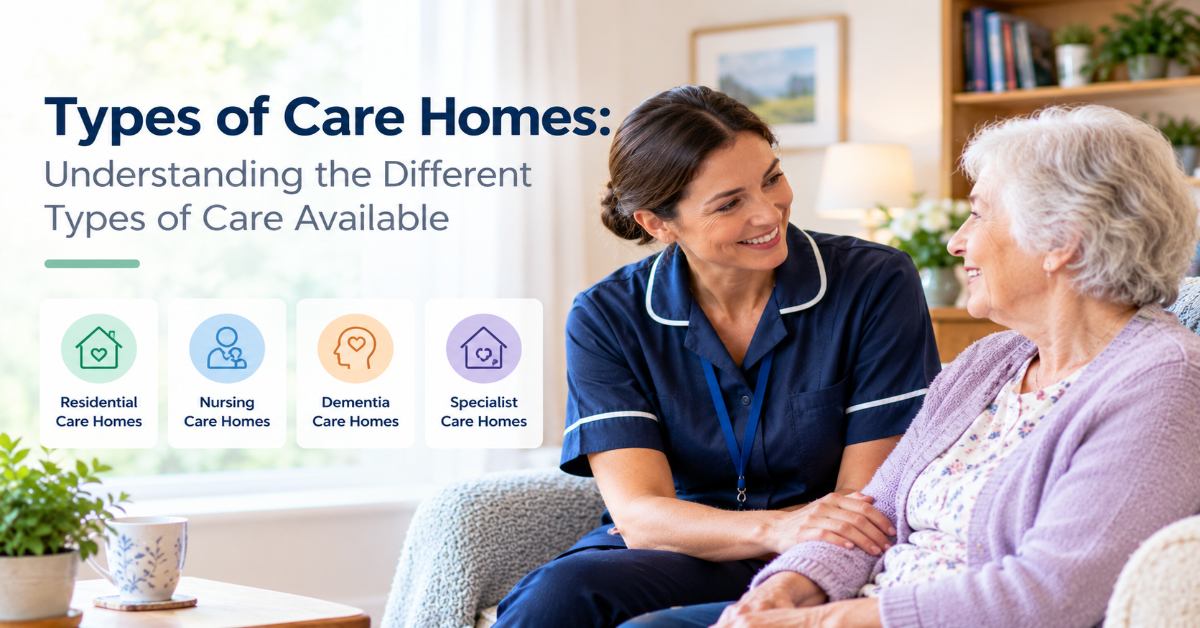
There are several different types of care homes, and the level of support can vary considerably between them. Residential care homes provide help with everyday personal care, while nursing homes provide additional support from qualified nurses. There are also specialist dementia care homes and dual-registered homes that provide both residential and nursing care.
Understanding these differences is important when choosing care for yourself or an older family member. The most suitable option will depend on a person’s health, mobility, personal care needs, independence and whether they require nursing support.
What Are the Different Types of Care Homes?
The main types of care homes for elderly people are residential care homes, nursing homes, dementia care homes and dual-registered care homes.
| Type of care home | Main support provided |
|---|---|
| Residential care home | Accommodation, personal care and help with everyday activities |
| Nursing home | Personal care alongside regular nursing support |
| Dementia care home | Specialist care for people living with dementia |
| Dual-registered care home | Both residential and nursing care |
These categories provide a useful starting point, but care can differ between individual homes. Before choosing a home, check that it can provide the specific support the person needs.
Residential Care Homes for Older People
Residential care provides accommodation and support for people who need help with everyday activities but do not necessarily require regular nursing care.
Staff can help with personal care such as washing, dressing and using the toilet. Support may also include medication, meals, mobility and other daily routines.
Living in a residential care home can also provide access to communal areas, activities and social opportunities. For someone who is finding it increasingly difficult to manage alone, this can provide a more supported daily routine while still allowing them to maintain as much independence as possible.
Elderly residential care may be suitable for someone whose main needs involve personal care and day-to-day support rather than ongoing nursing care.
When comparing residential homes for elderly people, look beyond the type of registration. Ask what personal care is provided, how staff support residents with changing needs, what activities are available and what the accommodation is like.
What Is a Nursing Home?
A nursing home provides accommodation and personal care alongside nursing support from qualified nurses.
Nursing care may be appropriate for someone whose health needs require regular nursing input rather than only assistance with everyday activities. The level of nursing support required will depend on the individual’s condition and care plan.
This is one of the main differences between residential and nursing care. A person may need substantial help with washing, dressing, eating or mobility but not require regular nursing care. Another person may have additional health needs that make a nursing home more suitable.
If nursing care is being considered, ask the home what nursing support is available and whether it can meet the person’s particular health and care requirements.
Care Home vs Nursing Home: What Is the Difference?
The difference between a care home and a nursing home mainly relates to the type and level of care provided.
A residential care home focuses primarily on personal care and support with everyday activities. A nursing home provides these forms of support as well as nursing care.
| Residential care | Nursing care |
|---|---|
| Personal care | Personal care |
| Help with daily activities | Help with daily activities |
| Accommodation and meals | Accommodation and meals |
| Support with everyday routines | Regular nursing support |
| Primarily for people who do not require ongoing nursing care | For people who require nursing care alongside personal support |
There is no simple rule based on age alone. Someone may need residential care because they cannot safely manage personal care independently, while another person of the same age may require nursing care because of more complex health needs.
Care needs can also change. Someone who initially moves into residential care may later require a higher level of support. It is therefore worth asking a home how it responds when a resident’s needs increase.
Dementia Care Homes
Dementia care homes provide specialist support for people living with dementia.
Dementia can affect memory, communication, mobility, behaviour and a person’s ability to manage everyday tasks. A suitable care environment can provide structure and support while helping residents maintain familiar routines and interests.
When looking at dementia care, consider whether staff have appropriate dementia training, whether the environment is suitable for people with different levels of cognitive impairment and how the home supports residents with personal care, medication, meals and activities.
The right setting will depend on the person’s individual needs and how their dementia affects their everyday life.
If you are considering whether residential dementia care may be appropriate, our guide on when to consider a dementia care home provides further information.
What Is a Dual-Registered Care Home?
A dual-registered care home can provide both residential and nursing care.
This can be useful for people whose care needs may increase over time. For example, a person may initially need assistance with personal care but later require nursing support.
Being able to receive different levels of care within the same setting can reduce the need for a move solely because someone’s needs have changed. However, families should always check what nursing and residential services the individual home actually provides.
Check: Home Care vs Care Home
What Are the Alternatives to Care Homes?
Moving into a care home is not the only option for an older person who needs additional support. Depending on their circumstances, there are alternatives to care homes that may allow them to remain at home or retain more independence.
Home care
Home care allows someone to remain in their own home while receiving support with personal care or everyday activities.
The amount of help can vary according to individual needs. For someone who is still able to live safely at home with additional assistance, this may be an alternative to residential care.
Check: What Is Residential Care
Adapting the home
Some people may benefit from changes to their home rather than moving into a care setting.
Adaptations could include improving bathroom access, installing grab rails or making other changes that help someone move around and manage everyday tasks more safely.
Sheltered or retirement housing
Sheltered or retirement housing can offer more independence than a care home while providing additional facilities or some level of support.
The arrangements vary, so it is important to establish exactly what care and support are available before deciding whether this is suitable.
When is a care home more appropriate?
An alternative may not provide enough support when someone needs frequent personal care, cannot safely manage at home, requires substantial assistance throughout the day or needs regular nursing care.
The person’s preferences should also be considered alongside their safety and care requirements.
How Do You Know Which Type of Care Home Is Right?
There is no single type of care home that will suit everyone. Start by considering the person’s current needs and the type of support they require.
Personal care needs
Consider whether they need help with washing, dressing, eating, using the toilet or taking medication.
Nursing requirements
If the person has ongoing or complex health needs, establish whether regular nursing support is required.
Dementia support
For someone living with dementia, look at the home’s experience, staff training, environment and approach to dementia care.
Changing care needs
Ask what happens if the person’s health or mobility deteriorates. A home that can accommodate changing needs may be preferable to one where another move could become necessary.
Daily life and wellbeing
Care is not limited to physical support. Find out about meals, activities, social interaction, personal routines, outdoor areas and opportunities for residents to maintain their interests.
Location
Think about how practical the location is for family and friends. Regular visits can be an important part of life in a care home.
Also Read: How to Choose the Right Care Home
What Should You Look for When Choosing a Care Home?
Once you have established the type of care required, compare individual homes rather than choosing based on the category alone.
When visiting a care home, ask:
- What type of care does the home provide?
- Does it offer residential care, nursing care or both?
- Does it support people living with dementia?
- What level of staffing is available?
- How are individual care plans created and reviewed?
- How does the home respond when a resident’s needs change?
- What activities are available?
- What are the bedrooms and communal areas like?
- How are meals provided?
- What are the visiting arrangements?
- What is included in the care home fees?
- Are there additional charges?
- What do the home’s latest inspection results show?
A visit can tell you things that a website or brochure cannot. Pay attention to how staff speak to residents, whether residents appear comfortable and whether the environment feels appropriate for the person who may be moving there.
Getting a Care Needs Assessment
If you are unsure what level of support someone requires, a care needs assessment can help identify their care and support needs.
The assessment considers how a person’s health and circumstances affect their ability to manage everyday life. It can help establish whether they may benefit from support at home or whether a care setting should be considered.
Where nursing needs are involved, advice from relevant health professionals can also help clarify the level of care required.
Having a clearer understanding of someone’s needs before contacting care homes makes it easier to ask relevant questions and compare suitable options.
Finding the Right Care Setting
Understanding the different types of care homes is the first step, but choosing the right individual home requires a closer look at the person’s needs and the care available.
Residential care may be appropriate when someone needs regular help with everyday activities, while nursing care is intended for people who also require nursing support. Specialist dementia care can provide a more suitable environment for someone living with dementia, while a dual-registered home may be useful when both residential and nursing care could be required.
Landona House Care Group provides a range of care services across its care homes, including residential, nursing, dementia and respite care. Families can explore the individual homes and discuss their requirements with the relevant care team to understand whether a particular setting is suitable.
FAQs About Types of Care Homes
Find answers to common questions below
The main types include residential care homes, nursing homes, dementia care homes and dual-registered care homes. The key difference is the level and type of support available.
Residential care generally focuses on personal care and support with everyday activities. Nursing care provides this support alongside regular care from qualified nurses for people with nursing needs.
A nursing home provides accommodation and personal care with nursing support available from qualified nurses. It may be suitable for people whose health needs require ongoing nursing care.
It may be possible, depending on the care home's registration, facilities and ability to meet the person's changing needs. This is worth discussing with the home before making a decision.
Start by assessing the person's personal care, health, mobility and nursing needs. Then consider dementia support if relevant, the home's approach to changing needs, its facilities, activities, location and overall suitability.