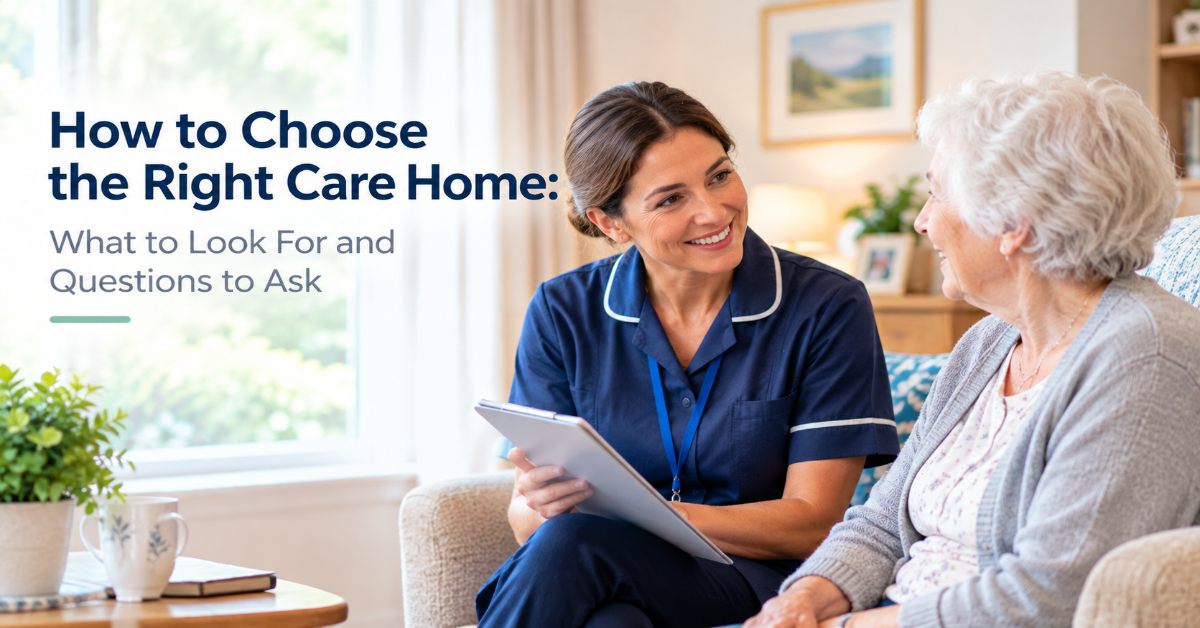
Choosing a care home is a significant decision, whether you are looking for yourself, a parent or another family member. The right home should provide the level of care needed while also offering a comfortable environment, respectful support and a lifestyle that suits the person living there.
It can help to compare several homes rather than choosing based only on location or appearance. Understanding the person’s care needs, visiting potential homes and asking the right questions can give you a much clearer picture of whether a care home is suitable.
How Do You Choose the Right Care Home?
The first step when choosing a care home is to understand what support the person needs now and whether those needs are likely to change.
A suitable care home should be able to provide the right level of support while encouraging residents to remain as independent as possible. When comparing care home choices, consider:
- The type and level of care provided
- Location and how easy it is for family to visit
- Staff and their approach to residents
- Bedrooms and communal areas
- Food and dietary requirements
- Activities and social opportunities
- Visiting arrangements
- Weekly fees and additional costs
- The home’s latest inspection information
- Whether the home can continue meeting changing care needs
You should also consider what matters most to the person who will live there. A home that works well for one person may not necessarily be right for another.
Read: Care Home Funding Help
What Type of Care Home Do You Need?
The type of care required is one of the most important things to establish before choosing a care home.
Residential care
Residential care is generally suitable for people who need regular help with personal care and everyday activities but do not require ongoing nursing care.
Support may include assistance with washing, dressing, mobility, meals and other daily routines.
Nursing care
Nursing care may be appropriate for someone with additional or ongoing nursing needs that require support from qualified nursing staff.
If someone’s health or care needs are more complex, it is important to discuss these requirements with potential homes before making a decision.
Dementia care
Someone living with dementia may benefit from a care home with staff who have appropriate dementia care experience and an environment designed around their needs.
When comparing homes, ask how staff support people with dementia, how activities are adapted and how the home manages changes in a resident’s condition.
Respite care
Respite care provides temporary care and accommodation. It can be useful when a family carer needs a break, when usual care arrangements are unavailable or when someone needs short-term support.
The home should confirm what type of respite care it can provide and whether it can meet the person’s needs during their stay.
What Should You Look for in a Care Home?
Knowing what makes a good care home involves looking beyond the building itself. The quality of everyday care and the way residents are treated are just as important as the facilities.
Does the home meet the person’s care needs?
Ask whether the home can support the person’s current needs and how it would respond if those needs change.
Depending on the individual, this could include support with:
- Personal care
- Mobility
- Medication
- Continence
- Eating and drinking
- Dementia
- Nursing needs
- Emotional and social wellbeing
A care home should be able to explain how it assesses a new resident’s needs and how care is planned around the individual.
What are the staff like?
Pay attention to how staff speak to residents during your visit.
Are they respectful and patient? Do they appear to know the residents? Do residents seem comfortable approaching staff?
It is also worth asking about staff training, how care is coordinated and what staffing arrangements are normally in place.
What is the home like day to day?
A brochure or website can give you useful information, but visiting the home gives you an opportunity to see how it actually feels.
Look at the cleanliness, noise levels, bedrooms, communal areas, outdoor spaces and accessibility. Notice whether residents are spending time together or taking part in activities, and consider whether the atmosphere would suit the person you are choosing the home for.
What Questions Should You Ask a Care Home?
Knowing which questions to ask a care home can make visits much more useful. Rather than simply asking whether a home provides care, ask questions that help you understand what living there would actually be like.
Questions about care
Ask:
- What level of care do you provide?
- Can you meet the person’s current care needs?
- How do you assess someone before they move in?
- What happens if their care needs increase?
- How do you respond when a resident’s condition changes?
- How are individual care plans reviewed?
Questions about staff
You may want to ask:
- What training do staff receive?
- How is care coordinated?
- Are qualified nurses available if required?
- Who should family members contact if they have concerns?
- How are new residents supported when they first move in?
Questions about daily life
Find out:
- What activities are available?
- Can residents choose how they spend their day?
- How are meals planned?
- Can dietary requirements and personal preferences be accommodated?
- Can residents bring personal belongings or furniture?
- Are there outdoor areas residents can use?
Questions about family and visitors
If regular contact with family is important, ask:
- When can relatives visit?
- Are there any visiting restrictions?
- Can family members take part in activities?
- How does the home communicate important changes in a resident’s care?
Questions about fees
Make sure you understand the financial arrangements before agreeing to anything.
Ask:
- What is included in the weekly fee?
- Are there additional charges?
- Could the cost change if care needs increase?
- What are the terms if the resident leaves the home?
- What notice is required?
Ask for the fees and terms in writing so you can compare them accurately with other homes.
What Should You Check When Visiting a Care Home?
A care home visit should be more than a tour of the building. Try to observe how the home operates and how residents interact with staff.
Look at:
- The general atmosphere
- Cleanliness and maintenance
- How staff communicate with residents
- Whether residents appear comfortable
- Bedrooms and privacy
- Communal spaces
- Gardens and outdoor areas
- Accessibility
- Meal arrangements
- Activities and social opportunities
It can also be useful to visit more than once. If possible, seeing the home at a different time of day may give you a broader understanding of what daily life is like.
Don’t be afraid to ask questions during the visit. A good care home should be willing to explain how it provides care and answer reasonable questions about life at the home.
Check: Home Care vs Care Home
How Do You Find a Care Home Near You?
Finding a care home is only the beginning. Once you have identified homes in suitable locations, you need to establish which ones can meet the person’s needs.
Potential sources of information include local council social care services, online searches, recommendations from people you trust and the Care Quality Commission (CQC).
The CQC’s information can also help you understand the regulatory position of a care home and review its inspection information.
It is sensible to create a shortlist rather than relying on the first suitable-looking home you find. Location matters, but it should be considered alongside care, quality, cost and the person’s preferences.
How Do You Compare Care Homes?
If you have visited several homes, comparing them against the same criteria can make the decision easier.
| What to compare | What to consider |
|---|---|
| Care | Can the home meet current and future needs? |
| Staff | Do staff appear attentive, respectful and approachable? |
| Location | Is it practical for regular family visits? |
| Accommodation | Is the bedroom comfortable and suitable? |
| Activities | Are there activities that match the person’s interests? |
| Food | Can dietary needs and preferences be accommodated? |
| Visitors | Does the visiting policy suit the family? |
| Fees | What is included and what costs extra? |
| Quality | What does the latest inspection information show? |
| Overall feel | Could the person feel comfortable and at home here? |
It can help to write down your impressions immediately after each visit. Details that seem clear during a tour can become difficult to remember when comparing several homes later.
What Should You Check About Care Home Fees?
Cost is an important part of choosing a care home, but the lowest weekly fee is not necessarily the best option if the home cannot meet the person’s needs.
Find out exactly what the quoted fee covers. Some services or personal expenses may be charged separately.
You should also ask what could happen to the cost if the person’s care needs change and check the contract for notice periods and other important terms.
If you are unsure how care may be funded, it is worth getting advice about the person’s financial assessment and available funding arrangements before making a commitment.
Also Read: How to Pay for a Care Home in UK
How Do You Know If a Care Home Is Right for Your Parent?
Choosing a care home for a parent can be particularly difficult because you may be helping with a decision that will significantly affect their daily life.
Where possible, involve your parent in the process and listen to what matters to them. This could include the location, type of room, food, activities, personal routines and how often they want family to visit.
During visits, pay attention to their reaction to the home. Do they feel comfortable? Can they imagine spending time there? Does the environment fit their personality and preferences?
It is also important not to assume that you should make every decision on their behalf. If they are able to make their own decisions, their wishes should remain central to the choice.
How Do You Choose a Dementia Care Home?
When choosing a dementia care home, there are some additional points to consider.
Ask about the staff’s experience and training in dementia care and how the home supports residents as their needs change.
You may also want to look at:
- How the environment supports safety and independence
- Whether activities are suitable for people living with dementia
- How staff communicate with residents
- How changes in behaviour or care needs are managed
- How families are kept informed
- Whether the home can continue providing appropriate support as dementia progresses
A visit can be particularly valuable because it allows you to see how staff interact with residents rather than relying solely on written information.
What Are the Red Flags When Choosing a Care Home?
A single observation does not necessarily mean that a care home provides poor care, but some things may be worth asking about further.
For example, you may want to investigate if:
- Staff consistently appear rushed or unavailable
- Residents appear uncomfortable or disengaged
- Staff cannot clearly explain how care is planned
- Pricing or additional charges are unclear
- Staff are reluctant to answer reasonable questions
- There are obvious concerns about cleanliness or maintenance
- You are unable to speak to staff about the person’s specific needs
- The home cannot explain how it would manage changing care requirements
Trust your overall impression, but give the home an opportunity to explain anything that concerns you. Asking direct questions can often provide useful context.
What Should You Do Before Choosing a Care Home?
Before making your final decision, make sure you have considered the following:
- Understand the person’s current care needs
- Consider whether their needs may change
- Visit more than one care home where possible
- Ask questions about care, staff and daily life
- Check what is included in the fees
- Read the contract carefully
- Review the home’s latest CQC information
- Discuss the decision with the person who will live there
- Check availability and any waiting list
- Compare the homes using the same criteria
There is no single checklist that can tell you which care home is right. The best choice is the home that can meet the person’s care needs while also providing an environment, routine and level of support that they can feel comfortable with.
Choosing the Right Care Home
Choosing the right care home takes more than comparing photographs, facilities or prices. The most important questions are whether the home can meet the person’s care needs, whether they will be treated with dignity and respect, and whether the environment is suitable for their everyday life.
Taking time to visit potential homes, ask detailed questions and compare your options can make the decision more informed.
If you are considering residential, nursing, dementia or respite care, you can also explore the different care options available and look at individual care homes to understand the services and support they provide.
FAQs: How to Choose the Right Care Home
Find answers to common questions below
Start by understanding the person's care needs and then compare homes based on care provision, staff, location, accommodation, activities, food, visiting arrangements, fees and quality information. Visiting potential homes is one of the best ways to understand whether they are suitable.
Ask about the level of care provided, staff training, how care needs are assessed and reviewed, daily activities, meals, visitors, fees, additional charges and what happens if the person's needs change.
There is no fixed number. Visiting several suitable homes can help you compare them and understand what is available locally. A second visit to a home you are seriously considering can also be useful.
Where possible, involve your parent in the decision and consider their preferences as well as their care needs. Visit potential homes together if appropriate and pay attention to how they respond to the environment, staff and daily activities.
Look at the cleanliness, atmosphere, bedrooms, communal areas and accessibility, but also observe how staff interact with residents. Ask about care, staffing, activities, meals, visitors and fees, and consider whether the home could continue meeting changing needs.
Some care homes provide support for people living with dementia, while others may have more specialist dementia services. Ask about staff training, the care environment, activities, safety, communication with families and how the home manages changing dementia-related needs.