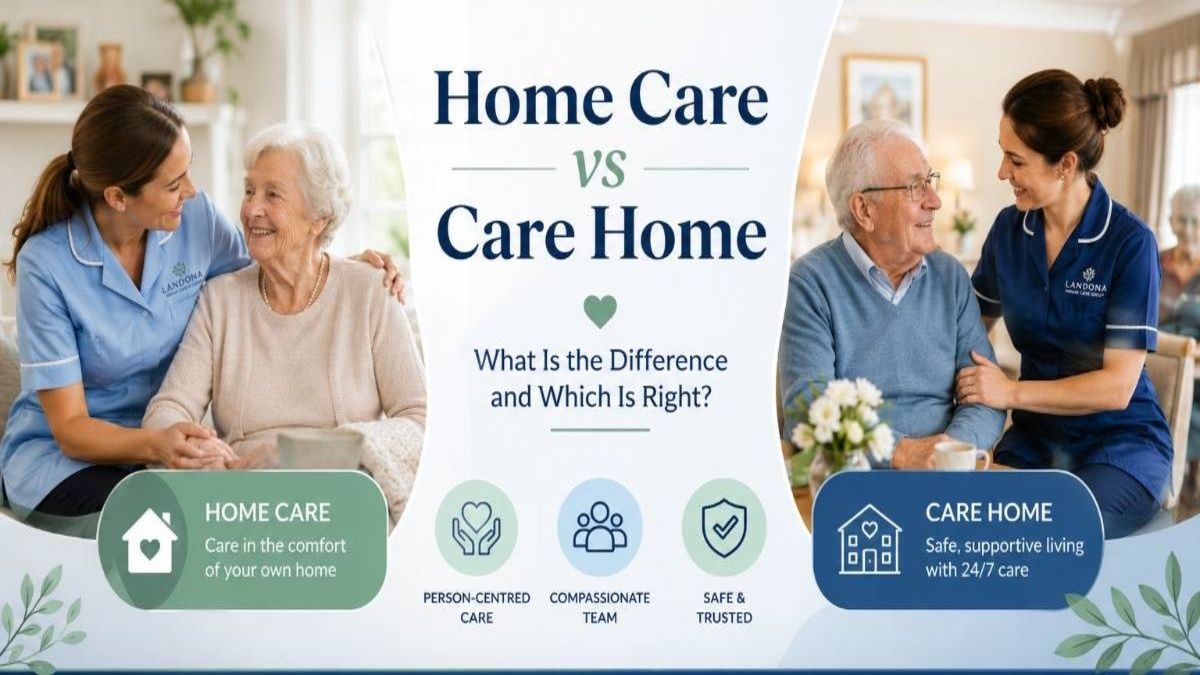
Around 418,000 people in the UK currently live in care homes, while over half a million receive some form of home care support. When an older relative begins needing regular help, deciding between these two options is one of the most important choices a family faces.
Both have genuine strengths. The right choice depends on the level of support needed, the individual’s health conditions, and how safely they can manage day-to-day life.
This guide covers:
- What home care and care homes actually include
- The main differences between the two
- Cost comparisons
- Dementia-specific considerations
- How nursing homes differ from standard care homes
- What to look for when making the decision
If you are noticing early warning signs in an older relative, our guide on 10 signs your elderly parent needs help covers what families commonly observe before a care decision becomes urgent.
What Is Home Care
Home care is support provided by a paid carer inside a person’s own home. The individual continues living independently, and carers visit at scheduled times.
What Home Care Includes
Home care services typically cover:
- washing, dressing, and personal hygiene
- meal preparation
- medication prompts and reminders
- mobility assistance
- light household tasks
- companionship visits
The frequency varies widely. Some people receive two or three visits per week. Others with higher needs may receive multiple visits daily, including morning, afternoon, and evening calls.
Home care suits people who are largely independent but need structured support at certain points of the day.
What Is a Care Home
A care home is a residential facility where older adults live full time and receive ongoing care from staff who are available around the clock.
What Care Homes Provide
Residential care homes typically include:
- a private or shared room with meals provided
- personal care support throughout the day
- planned activities and social interaction
- 24-hour staff availability
- support with mobility and daily routines
Families usually begin researching care homes UK when a relative’s support needs go beyond what home visits can safely cover.
For a full breakdown of how residential settings work, our guide on what is residential care explains the structure and types of care available.
Difference Between Care Home and Home Care
The core difference between care home and home care is location and intensity of support.
Home care brings support into the person’s existing home. Care homes require the person to move into a staffed residential setting.
Home Care: Staying in Familiar Surroundings
Home care works well when someone:
- manages most daily tasks independently
- has a safe and suitable home environment
- benefits from familiar surroundings and existing routines
- has family or community support nearby
This option is generally more appropriate in the earlier stages of ageing or during recovery from illness.
Care Homes: Full-Time Support in a Residential Setting
A care home becomes more appropriate when someone:
- needs supervision throughout the day
- has experienced repeated falls at home
- struggles to manage medication safely
- shows signs of advancing cognitive decline
- is becoming socially isolated
Residential care provides structured routines, immediate access to staff, and a safer physical environment for people with higher support needs.
Home Care vs Care Home for Dementia
Dementia changes support requirements over time, and the right setting often shifts as the condition progresses.
Early Dementia: Home Care Can Work Well
In the earlier stages, many people with dementia continue living at home with support. Home care can help with:
- medication reminders
- structured daily routines
- safe meal preparation
- companionship and orientation
With the right support structure in place, some individuals remain at home safely for several years after a diagnosis.
When Dementia Care Homes Become Necessary
As dementia progresses, challenges at home often increase significantly. Families may begin considering dementia care homes UK when someone:
- wanders or becomes seriously disoriented
- is regularly missing medication
- can no longer manage personal safety tasks
- becomes frequently distressed or confused, particularly at night
Specialist dementia care homes are designed around these challenges. They provide secured environments, structured cognitive support, and trained staff experienced in managing dementia-related behaviour.
For a detailed explanation of what specialist dementia support involves, our guide on what is dementia care covers the differences between standard elderly care and dedicated dementia provision.
Care Home or Home Care: Which Is Better
Neither option is universally better. The right choice depends entirely on the individual’s circumstances.
Home Care May Be the Better Option When:
- the person strongly wants to remain at home
- support needs are moderate and manageable with scheduled visits
- the home environment is physically safe
- family members are available to provide additional informal support
A Care Home May Be the Better Option When:
- the person needs frequent or unpredictable supervision
- falls, mobility problems, or cognitive decline make home safety a concern
- social isolation has become a serious issue
- care needs include dementia support or complex health management
- family carers are experiencing significant stress or burnout
For many families, moving to a care home also reduces the pressure on relatives who have been providing unpaid support, sometimes over several years.
Cost Difference Between Home Care and Care Homes
Home Care Costs in the UK (2026)
Home care in the UK typically costs between £18 and £30 per hour, depending on location and the care provider. Live-in home care, where a carer lives in the home full time, generally costs between £900 and £1,500 per week.
For people requiring multiple visits daily, the cumulative cost of home care can exceed that of a care home placement.
Care Home Costs in the UK (2026)
The average weekly cost of a residential care home in the UK is approximately £1,100 to £1,200. Nursing home fees are typically higher, averaging between £1,200 and £1,400 per week, reflecting the additional medical staffing involved.
Local authorities may contribute to care home costs through means-tested funding for those who qualify. NHS Continuing Healthcare (CHC) funding is available in some cases where care needs are primarily health-related.
For a full breakdown of funding options, our guide on how to pay for a care home in the UK covers local authority support, NHS contributions, and self-funding arrangements in detail.
Difference Between Care Homes and Nursing Homes
Many families are unclear on what separates a standard residential care home from a nursing home.
Residential Care Homes
Residential care homes provide:
- personal care and daily living support
- accommodation and meals
- companionship and planned activities
- 24-hour staffing from care workers
They do not have qualified nurses on-site and are not equipped to manage complex or ongoing medical conditions.
Nursing Homes
Nursing homes provide everything a residential care home offers, plus:
- qualified nurses available at all times
- clinical medication management
- wound care and post-surgical support
- monitoring and management of complex health conditions such as Parkinson’s disease, stroke rehabilitation, or advanced respiratory conditions
Families in specific regions often search for services such as nursing homes in Widnes when a relative requires this level of clinical support alongside residential care.
How to Choose Between Home Care and a Care Home
When assessing the right option, consider the following areas:
Physical health: How frequently does the person need medical or nursing-level support?
Cognitive health: Is dementia or another condition affecting safety, memory, or daily function?
Mobility: Has the person had falls, or are they at risk?
Social wellbeing: Is the person isolated, or do they have regular contact with others?
Home environment: Is the property physically suited to safe independent living?
Family support: How much additional support can family members realistically provide?
Many families start with home care and move to a residential setting as needs increase. A formal needs assessment carried out by a local authority social worker can also help clarify what level of support is required and what funding may be available.
For families in the North East, care homes in Middlesbrough provide a range of residential, dementia, and nursing options depending on individual care requirements.
FAQs About Home Care vs Care Homes
Home care provides support within a person's own home through scheduled carer visits. Care homes are residential settings where individuals live full time with 24-hour staff availability.
It depends on the level of support needed. For people requiring only a few hours of help per week, home care is typically less expensive. For those needing multiple daily visits or live-in support, the cost can be comparable to or greater than a care home placement.
A move is often considered when safety at home becomes a concern, when dementia progresses significantly, when falls or mobility issues increase, or when the frequency of support needed exceeds what scheduled home visits can cover.
Care homes provide personal and residential support without on-site nursing. Nursing homes also have qualified nurses available around the clock to manage clinical and medical needs.
The NHS does not routinely fund care home placements. However, NHS Continuing Healthcare (CHC) is available for individuals whose primary need is health-related, and this covers the full cost of care. Local authority funding is separately available for those who meet eligibility criteria through a means test.