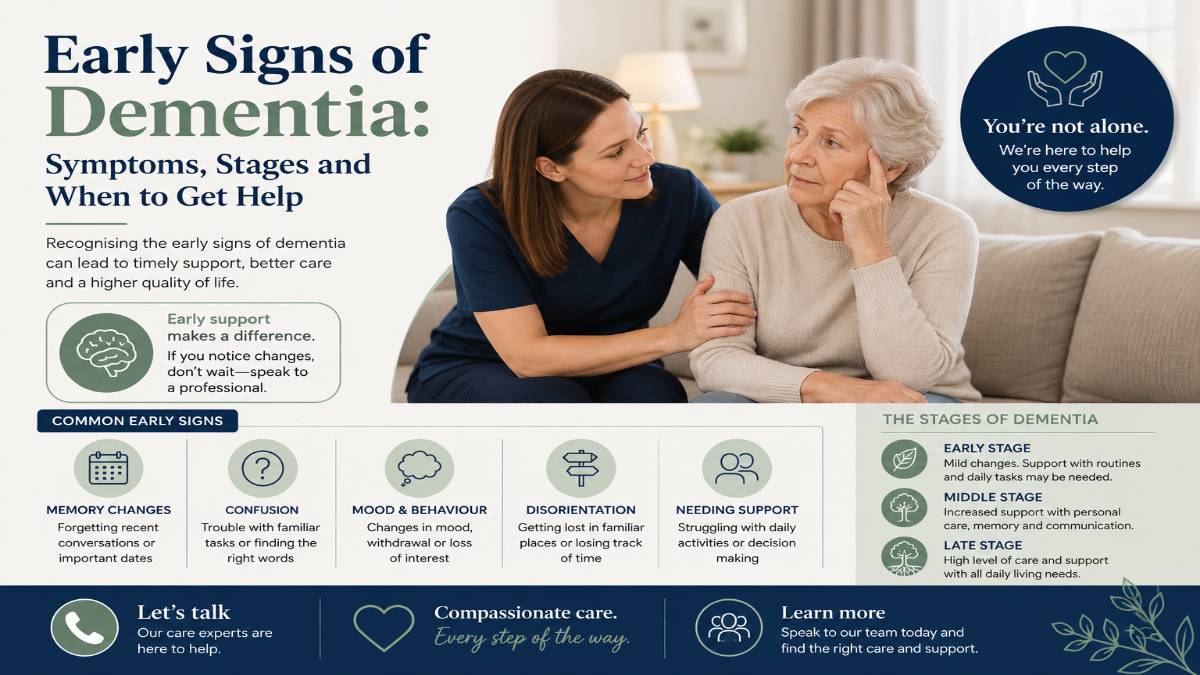
Dementia is not a single disease. It is a term used to describe a group of symptoms that affect memory, thinking, communication and the ability to carry out everyday tasks. Around 944,000 people in the UK are currently living with dementia, and that number is projected to rise to 1.6 million by 2040.
For many families, the earliest signs are easy to miss or dismiss as normal ageing. The difference between occasional forgetfulness and the early symptoms of dementia is persistence. When changes to memory, behaviour or communication begin affecting daily life regularly, that is the point to take notice.
This guide covers:
- The most common early signs of dementia
- How symptoms differ by gender and age group
- The difference between Alzheimer’s and other types of dementia
- What happens in the early stages
- When to seek medical advice and what to expect
If you have already noticed changes in an older relative and are wondering what kind of support may be needed, our guide on 10 signs your elderly parent needs help covers the practical warning signs families commonly observe before a care decision becomes necessary.
What Are the Early Signs of Dementia
The early signs of dementia vary from person to person, but several symptoms appear commonly across different types of the condition.
The most frequently reported early signs include:
- memory loss that affects daily life, particularly short-term memory
- repeating questions or conversations within a short space of time
- difficulty concentrating or completing tasks that previously felt routine
- confusion about dates, time or familiar places
- struggling to follow conversations or find the right words
- misplacing items and being unable to retrace steps
- changes in mood, personality or behaviour
- withdrawal from social activities and hobbies
- poor judgement or decision-making
- changes in visual perception, particularly in some less common types of dementia
Many people first notice changes in short-term memory or communication. In others, behavioural or personality changes appear before obvious memory problems develop.
10 Early Dementia Symptoms to Watch For
1. Memory Loss That Affects Daily Life
Forgetting a name once and remembering it later is normal. Forgetting recent conversations, appointments or important information on a regular basis is not. This is one of the most recognised early dementia symptoms and is often the first thing families notice.
2. Confusion With Time and Place
A person may lose track of dates, seasons or the sequence of recent events. They may become confused about where they are, even in familiar environments such as their own neighbourhood or a place they have visited regularly for years.
3. Difficulty Finding Words
Pausing mid-sentence, using the wrong word for common objects, or losing the thread of a conversation entirely are all early signs. This is sometimes described as being on the tip of the tongue frequently.
4. Changes in Mood or Personality
Increased anxiety, irritability, low mood, or sudden personality shifts can appear in the early stages of dementia. Someone who was previously calm and sociable may become withdrawn, suspicious or unusually emotional.
5. Difficulty Completing Familiar Tasks
Activities that previously required no conscious effort, such as following a recipe, managing household bills, or driving a familiar route, may start to feel confusing or take significantly longer.
6. Poor Judgement or Decision-Making
Unusual financial decisions, lapses in personal hygiene, or reduced awareness of risks and safety can all indicate early cognitive change.
7. Misplacing Items Frequently
Putting everyday items in unusual places and being unable to retrace steps to find them is a common early symptom. This is different from occasionally losing something and finding it shortly after.
8. Withdrawal From Social Activities
People may start avoiding conversations, cancel plans, or stop pursuing hobbies they previously enjoyed. This is often linked to confusion or embarrassment rather than a deliberate choice.
9. Problems With Planning or Concentration
Organising tasks, following multi-step instructions, or managing anything that requires sustained attention can become noticeably harder.
10. Changes in Visual Perception
In some types of dementia, particularly Lewy body dementia, visual changes may appear early. These can include difficulty judging distances, problems reading, or trouble recognising familiar objects.
How Does Dementia Start
Dementia develops gradually and the pace varies between individuals. For some people, the early signs of dementia appear over months. For others, changes develop slowly across several years before becoming noticeable.
Early dementia symptoms are frequently mistaken for:
- normal ageing
- stress or fatigue
- depression or anxiety
- medication side effects
- thyroid or vitamin deficiencies
This is why a formal assessment matters. Several conditions can mimic dementia symptoms, and some are treatable. A GP can rule out other causes and arrange cognitive assessments where appropriate.
The pattern of early symptoms also depends on the type of dementia. Alzheimer’s disease most commonly starts with short-term memory problems. Vascular dementia may begin with difficulties in reasoning or planning. Frontotemporal dementia often starts with personality or behaviour changes rather than memory loss.
Early Signs of Dementia in Women
The early signs of dementia in women often include memory problems, difficulty concentrating, mood changes, increased anxiety and withdrawal from social activities. Women are statistically more likely to develop Alzheimer’s disease than men, partly because women on average live longer, but research also suggests hormonal and biological factors may play a role.
Symptoms in women can sometimes be harder to identify in the early stages because hormonal fluctuations, menopause, stress and other health conditions can produce similar effects on mood and memory. If symptoms are persistent, affect daily independence or worsen over time, a medical assessment is the appropriate next step regardless of other possible explanations.
Early Signs of Dementia in Men
The early signs of dementia in men frequently include memory loss, changes in behaviour, increased irritability, difficulty with planning or decision-making, communication problems and reduced motivation. Some men show significant behavioural or personality changes before obvious memory difficulties appear.
Men are statistically less likely to seek medical help in the early stages, which can lead to diagnosis at a later point. If family members notice sustained changes in behaviour, mood or daily function, raising these concerns with a GP is worthwhile.
Early Onset Dementia Symptoms
Early onset dementia, sometimes called young onset dementia, refers to a diagnosis made before the age of 65. It is less common but not rare. Around 70,800 people in the UK are living with young onset dementia.
Symptoms of early onset dementia can include:
- memory difficulties affecting work performance
- problems with concentration and multitasking
- changes in personality or social behaviour
- difficulty organising tasks or managing responsibilities
- language and communication problems
Because dementia is more commonly associated with older adults, early onset symptoms are sometimes attributed to stress, burnout or mental health conditions, which can delay diagnosis. If symptoms persist and affect daily functioning, a referral to a specialist is appropriate.
Early Signs of Alzheimer’s vs Other Types of Dementia
Many people use the terms Alzheimer’s and dementia as though they mean the same thing. They do not.
Dementia is a broad term describing a group of symptoms. Alzheimer’s disease is the most common cause of dementia, accounting for around 60 to 70 percent of cases in the UK.
The early signs of Alzheimer’s disease typically include:
- short-term memory loss, particularly forgetting recent conversations or events
- repeatedly asking the same questions
- difficulty learning or retaining new information
- confusion about time or location
Other types of dementia can present differently in the early stages:
- Vascular dementia often begins with problems in reasoning, planning or concentration rather than memory
- Lewy body dementia may present with visual hallucinations, changes in alertness and movement difficulties
- Frontotemporal dementia commonly starts with personality changes, socially inappropriate behaviour or significant language difficulties
Understanding which type of dementia is involved matters because it affects both the progression of symptoms and the type of support that will be most beneficial.
Our guide on what is dementia care explains how specialist dementia support differs from standard elderly care and what families should look for when exploring options.
What Happens in the Early Stages of Dementia
In the early stages of dementia, most people retain a significant degree of independence. Symptoms are present but may be mild enough that the person continues managing most aspects of daily life with minimal support.
Early stage dementia typically involves:
- increasing forgetfulness, particularly for recent events
- occasional confusion about time or place
- mild difficulties with communication or word-finding
- some change in mood or motivation
- beginning to struggle with tasks requiring sustained concentration
As dementia progresses beyond the early stage, symptoms become more noticeable and more consistent. The pace of this progression varies considerably between individuals and between different types of dementia.
When to Seek Medical Advice
The right time to seek medical advice is when memory problems, confusion or behavioural changes begin affecting daily life regularly, not just occasionally.
A GP can:
- carry out an initial cognitive assessment
- review medications and rule out other treatable causes
- refer to a memory clinic or specialist for further assessment
- provide information on support services and next steps
An early diagnosis does not change the underlying condition, but it allows individuals and families to understand what is happening, access appropriate support sooner, and plan ahead for future care needs while the person with dementia can still contribute to those decisions.
If you are noticing changes in an older relative and are unsure whether what you are seeing is significant, our guide on 10 signs your elderly parent needs help may help you decide when to act.
Support and Care Options for Dementia
Once a diagnosis is in place, families often begin exploring what support looks like in practice. The right type of support depends on the stage of dementia, the person’s living situation and the level of care they need.
Some people continue living at home with care visits in the earlier stages. As dementia progresses, many families consider specialist dementia care homes where staff are trained specifically in dementia support and the environment is designed to reduce confusion and promote safety.
At Landona House Care Group, our homes across the UK provide dedicated dementia care, residential and nursing support. Each home offers a structured, familiar environment with 24-hour staff availability and activities designed around resident wellbeing.
If you are exploring care options for a relative with dementia, our guide on home care vs care home sets out the differences between the two approaches and when each tends to be most appropriate.
To find out more about our homes or to arrange a visit, contact the Landona House Care Group team or view our care homes.
FAQs About Early Signs of Dementia
The early signs of dementia include persistent short-term memory loss, confusion about time or place, difficulty finding words, changes in mood or personality, struggling with familiar tasks and withdrawal from social activities. These symptoms differ from occasional forgetfulness in that they are persistent, worsen over time and begin affecting daily independence.
For most people, the first noticeable sign of dementia is short-term memory loss, such as forgetting recent conversations, missing appointments or repeatedly asking the same questions. In some types of dementia, particularly frontotemporal dementia, personality or behaviour changes appear before memory problems develop.
Dementia usually starts gradually with mild symptoms that worsen over time. The starting point depends on the type of dementia. Alzheimer's disease typically begins with short-term memory problems. Vascular dementia often begins with reasoning or planning difficulties. Frontotemporal dementia frequently begins with personality or language changes.
Early symptoms of Alzheimer's disease most commonly include short-term memory loss, repeating questions or conversations, difficulty retaining new information, confusion about dates or location and increasing difficulty with tasks that require concentration.
Yes. Early onset or young onset dementia refers to a diagnosis made before the age of 65. Around 70,800 people in the UK are living with young onset dementia. Symptoms are the same as in older adults but may initially be attributed to stress or other conditions, which can delay diagnosis.
Dementia is a broad term for a group of symptoms affecting memory, thinking and behaviour. Alzheimer's disease is the most common cause of dementia, accounting for around 60 to 70 percent of cases. Other causes include vascular dementia, Lewy body dementia and frontotemporal dementia.
You should seek medical advice when symptoms are persistent, worsen over time or begin affecting daily independence and safety. A GP can carry out an initial assessment, rule out other treatable conditions and refer to a memory clinic for further evaluation if needed.
Frequently Asked Questions
Find answers to common questions below
ks and withdrawal from social activities. These symptoms differ from occasional forgetfulness in that they are persistent, worsen over time and begin affecting daily independence.