When someone starts experiencing memory problems, confusion or changes in behaviour, families often hear the terms dementia and Alzheimer’s disease used together. This can make it difficult to understand whether they mean the same thing.
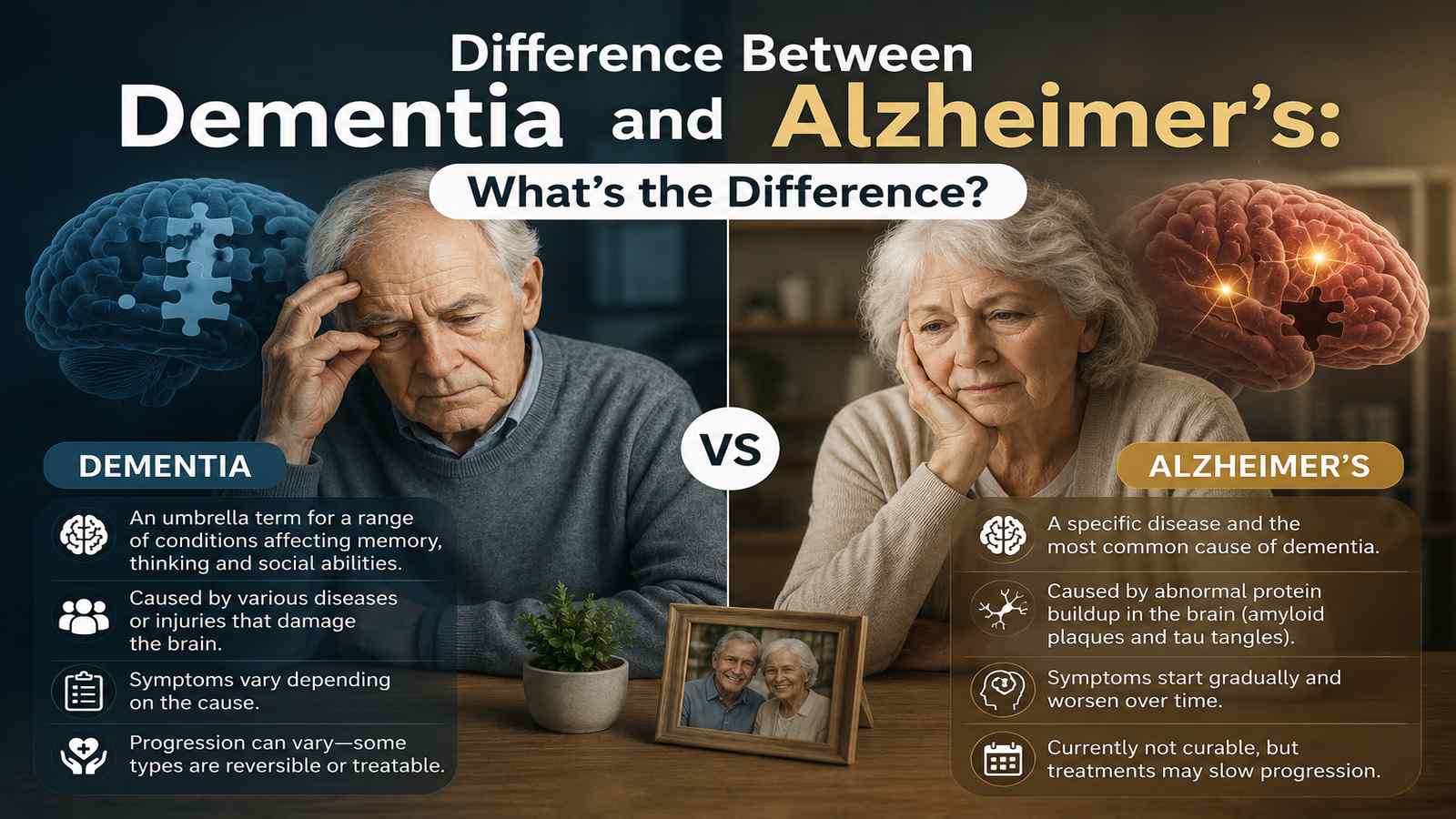
The simple answer is that dementia is a group of symptoms that affect thinking, memory and daily abilities, while Alzheimer’s disease is a specific condition that can cause dementia. Alzheimer’s is the most common cause of dementia, but it is not the only one.
Understanding the difference between dementia and Alzheimer’s can help families recognise symptoms, seek the right medical advice and make informed decisions about future care and support.
Is Dementia the Same as Alzheimer’s?
No, dementia and Alzheimer’s are not the same condition.
Dementia is an umbrella term used to describe a decline in cognitive abilities that affects everyday life. It can affect memory, communication, problem-solving, judgement and behaviour.
Alzheimer’s disease is one specific type of dementia caused by changes in the brain. Over time, these changes damage brain cells and affect areas responsible for memory, thinking and communication.
A person can have dementia caused by Alzheimer’s disease, but dementia can also develop because of other conditions, including vascular dementia, Lewy body dementia and frontotemporal dementia.
What Is Dementia?
Dementia describes a collection of symptoms caused by changes in the brain. It is not a normal part of ageing, although the likelihood of developing dementia increases as people get older.
The symptoms of dementia vary from person to person, but common changes may include:
- Increasing memory problems, especially forgetting recent events
- Difficulty finding the right words or following conversations
- Problems making decisions or solving everyday problems
- Changes in mood, personality or behaviour
- Needing more support with daily activities
In the early stages, some people may still manage many parts of their everyday life independently. However, as dementia progresses, they may require additional support with tasks such as personal care, medication, eating and staying safe.
There are several different types of dementia, each affecting the brain in different ways. Alzheimer’s disease is the most common type, but other forms include vascular dementia, Lewy body dementia and frontotemporal dementia.
You can learn more about the different forms of the condition in our guide to types of dementia, which explains how each type develops and the symptoms families may notice.
What Is Alzheimer’s Disease?
Alzheimer’s disease is a progressive condition that affects the brain. It happens when abnormal changes develop in brain cells, leading to gradual damage over time.
For many people, Alzheimer’s initially affects the areas of the brain involved in memory. Early signs may include:
- Forgetting recent conversations or events
- Repeating questions or statements
- Misplacing familiar items
- Struggling with planning or organisation
- Becoming less confident with familiar tasks
In the early stages, symptoms may be mild and a person may continue with many normal activities. As the disease progresses, changes become more noticeable and can eventually lead to dementia.
This is why Alzheimer’s is often described as a cause of dementia rather than a separate condition from dementia.
Difference Between Dementia and Alzheimer’s Disease
Although the terms are often used together, dementia and Alzheimer’s have different meanings.
| Dementia | Alzheimer’s Disease |
|---|---|
| A general term describing symptoms affecting memory, thinking and daily abilities | A specific disease that damages the brain |
| Can be caused by several different conditions | The most common cause of dementia |
| Symptoms vary depending on the type of dementia | Often begins with memory problems before affecting other abilities |
| Includes conditions such as vascular dementia and Lewy body dementia | Caused by changes in the brain linked to the disease process |
The relationship between the two can be explained simply:
Alzheimer’s disease can cause dementia, but not all dementia is caused by Alzheimer’s disease.
For families supporting someone with memory problems, understanding this difference can help them seek appropriate advice and plan for future needs.
Can You Have Dementia Without Alzheimer’s Disease?
Yes, it is possible to have dementia without having Alzheimer’s disease.
While Alzheimer’s is the most common cause of dementia, several other conditions can affect the brain and lead to similar symptoms. The type of dementia someone develops depends on which areas of the brain are affected and the changes taking place.
Some other common types of dementia include:
Vascular Dementia
Vascular dementia happens when problems with blood supply to the brain damage brain cells. It can occur after strokes or as a result of conditions that affect the brain’s blood vessels.
Symptoms may include:
- Problems with planning and decision-making
- Slower thinking
- Difficulty concentrating
- Changes in mood or behaviour
The symptoms of vascular dementia can vary depending on which areas of the brain have been affected.
You can read more about this condition in our guide to vascular dementia, including its symptoms, causes and progression.
Lewy Body Dementia
Lewy body dementia is caused by abnormal protein deposits developing in the brain. It can affect thinking, movement, sleep and behaviour.
People with Lewy body dementia may experience:
- Changes in alertness throughout the day
- Visual hallucinations
- Movement difficulties similar to Parkinson’s disease
- Problems with attention and thinking
Frontotemporal Dementia
Frontotemporal dementia affects the front and side areas of the brain. Unlike Alzheimer’s disease, early symptoms may involve changes in personality, behaviour or language rather than memory problems.
This means two people with dementia can have very different symptoms depending on the type they have.
Dementia Symptoms vs Alzheimer’s Symptoms
Because Alzheimer’s is a type of dementia, there is some overlap between symptoms. However, the first signs someone experiences can vary depending on the cause.
| Dementia Symptoms | Alzheimer’s Symptoms |
|---|---|
| Memory problems | Increasing difficulty remembering recent information |
| Confusion with everyday tasks | Repeating questions or forgetting conversations |
| Changes in behaviour or personality | Difficulty planning, organising or completing familiar tasks |
| Problems communicating | Trouble finding words or following conversations |
| Reduced ability to manage daily activities | Increasing need for support as the condition progresses |
It is important to remember that symptoms alone cannot confirm whether someone has Alzheimer’s disease or another type of dementia. A diagnosis usually requires assessment from healthcare professionals.
How Are Dementia and Alzheimer’s Diagnosed?
If someone is experiencing changes in memory, thinking or behaviour, the first step is usually speaking with a GP. They may recommend further assessments through specialist services, such as a memory clinic.
A dementia assessment may include:
- Discussing symptoms and changes over time
- Reviewing medical history
- Memory and thinking tests
- Physical examinations
- Brain scans or other investigations where needed
Receiving a diagnosis can help families understand what is happening and access the right support. It can also help them plan for future care needs as symptoms change.
When Might Someone Need Dementia Care Support?
As dementia progresses, some people may need more support than family members can safely provide at home. This does not happen at the same stage for everyone, as each person’s condition develops differently.
Families may consider specialist dementia care when someone begins to need support with:
- Personal care and daily routines
- Medication management
- Eating and drinking
- Communication
- Moving safely around the home
- Managing changes in behaviour
At Landona House Care Group, our dementia care services provide personalised support for people living with different forms of dementia. Care is tailored around each person’s abilities, preferences and changing needs, helping residents maintain independence while receiving the support they require.
For families exploring care options, choosing the right environment can make a significant difference. Specialist dementia care homes provide trained support, structured routines and a safe setting designed around the needs of people living with dementia.
Understanding the Difference Between Dementia and Alzheimer’s
Knowing the difference between dementia and Alzheimer’s disease helps families understand symptoms and make better decisions about support.
Alzheimer’s disease is one of the main causes of dementia, but dementia can also develop from other conditions such as vascular dementia or Lewy body dementia. Because every person experiences dementia differently, a professional assessment is important for understanding individual needs.
With the right information, families can prepare for changes, access appropriate support and ensure their loved one receives care that respects their choices and quality of life.
FAQs About Dementia and Alzheimer’s
Find answers to common questions below
Yes, Alzheimer’s disease is the most common type of dementia. It is a specific disease that causes damage to the brain and can eventually lead to dementia symptoms.
The main difference is that dementia describes a group of symptoms affecting memory, thinking and daily abilities, while Alzheimer’s disease is a specific condition that can cause those symptoms.
Yes. Dementia can be caused by several conditions, including vascular dementia, Lewy body dementia and frontotemporal dementia.
Early signs of Alzheimer’s may include memory problems, repeating questions, difficulty organising tasks and changes in confidence when completing familiar activities.
No. While the risk of dementia increases with age, dementia is not a normal part of getting older. It is caused by changes in the brain that affect a person’s abilities.
Families may consider dementia care when a person needs more support with everyday activities, safety, medication, personal care or managing changes linked to dementia progression.