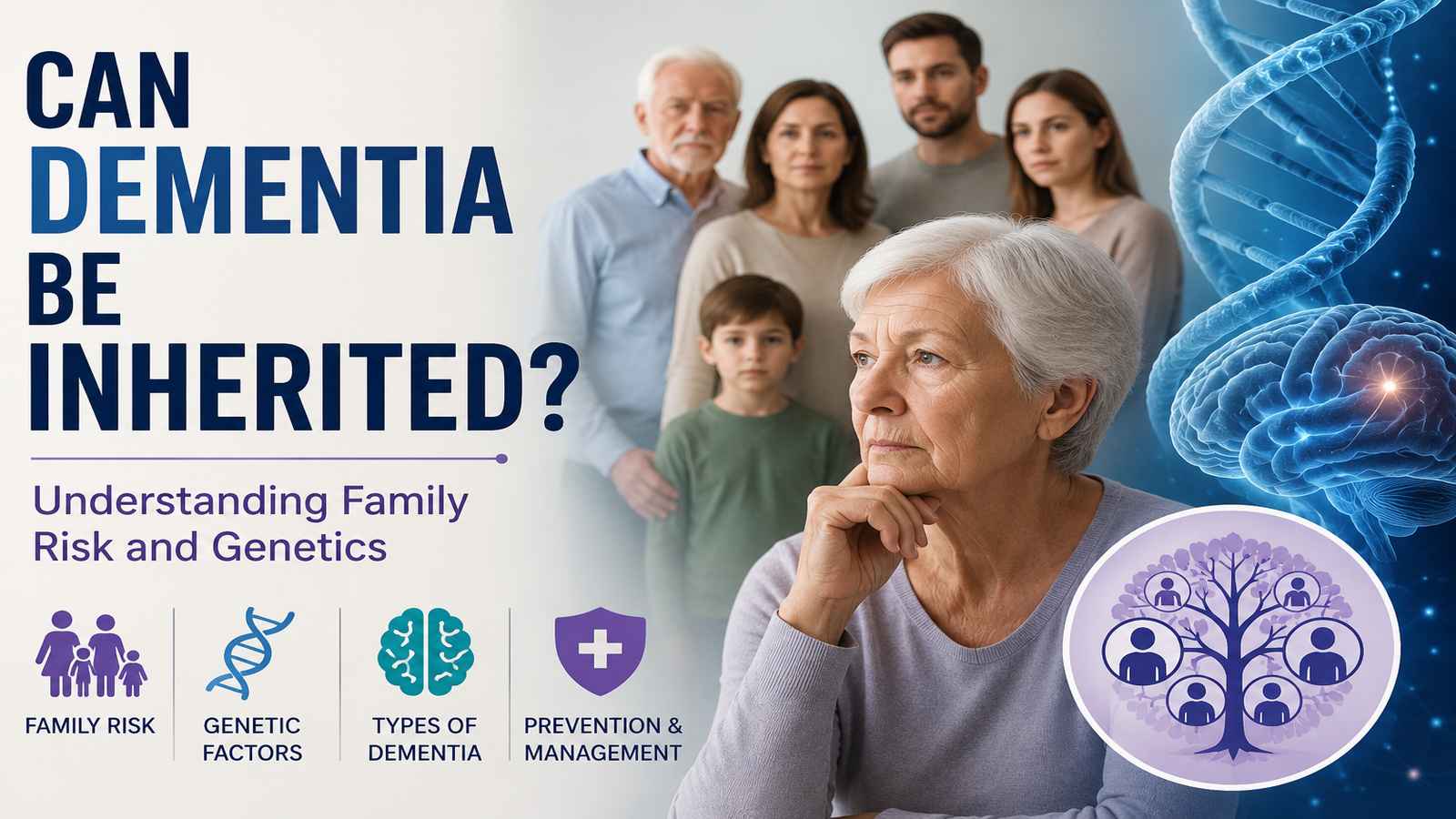
If someone in your family has been diagnosed with dementia, it’s natural to wonder whether you or your children could also develop the condition.
The simple answer is no, most dementia is not hereditary. While some rare forms of dementia can be inherited, the vast majority of people develop dementia because of a combination of ageing, overall health, lifestyle and, in some cases, genetic risk factors.
Understanding the difference between inherited dementia and an increased genetic risk can help families make informed decisions and avoid unnecessary worry.
Is Dementia Hereditary?
For most people, dementia is not hereditary.
Most types of dementia do not pass directly from parent to child. Having a parent, grandparent or sibling with dementia may increase your awareness of the condition, but it does not mean you will develop it yourself.
Many people ask, “Does dementia run in families?” The answer is that it sometimes can, but usually not because of a single inherited gene. Instead, several factors influence a person’s risk, including:
- Age
- Blood pressure
- Heart health
- Diabetes
- Smoking
- Physical activity
- Family history
- Genetics
Age remains the biggest risk factor. As more people live into their 70s, 80s and beyond, it is increasingly common for more than one member of the same family to develop dementia without the condition being directly inherited.
Is Dementia Genetic?
People often search for “Is dementia genetic?”, but genetic and hereditary do not mean the same thing.
A person may carry genes that slightly increase their risk of developing dementia during their lifetime. These genes do not guarantee that dementia will occur, and many people with these genetic risk factors never develop the condition.
A hereditary condition is different. It is caused by a gene mutation that can be passed from one generation to the next. These inherited forms of dementia are uncommon and account for only a small proportion of dementia diagnoses.
This is why someone with no family history can still develop dementia, while many people whose relatives have dementia never experience the condition themselves.
Is Alzheimer’s Disease Hereditary?
Another common question is, “Is Alzheimer’s hereditary?”
In most cases, Alzheimer’s disease is not hereditary.
Most people diagnosed with Alzheimer’s disease develop symptoms after the age of 65. These later-life cases are rarely caused by inherited gene mutations.
Researchers have identified genes that may increase the likelihood of developing Alzheimer’s disease, but these are considered risk genes, not genes that directly cause the disease. They work alongside other factors such as age, cardiovascular health and lifestyle.
Is Early-Onset Alzheimer’s Disease Hereditary?
A small number of people develop Alzheimer’s disease before the age of 65. This is known as early-onset Alzheimer’s disease.
Some cases of early-onset Alzheimer’s are linked to inherited gene mutations. Doctors are more likely to investigate a hereditary cause when:
- Several close relatives developed Alzheimer’s disease at a young age.
- Dementia has affected multiple generations of the same family.
- Symptoms appeared in a person’s 40s or 50s.
Although these inherited forms receive a lot of attention, they remain rare compared with the number of people diagnosed with Alzheimer’s disease later in life.
Does Dementia Run in Families?
Many families ask whether dementia runs in families after seeing more than one relative receive a diagnosis.
Sometimes this happens because several family members have lived to an older age, when dementia becomes more common. This does not automatically mean the condition has been inherited.
Doctors may consider a stronger genetic link if they notice patterns such as:
- Dementia affecting several close relatives.
- Symptoms developing at a younger than expected age.
- The same uncommon type of dementia occurring across multiple generations.
If you are worried about your family’s history of dementia, speaking with your GP is the best place to start. They can review your family history and decide whether further assessment or referral to a genetics service is appropriate.
Is Vascular Dementia Hereditary?
Is vascular dementia hereditary? In most cases, the answer is no.
Vascular dementia develops when the brain is damaged by reduced blood flow, often following a stroke or because of long-term conditions affecting blood vessels.
The condition itself is not usually inherited. However, some of the health conditions that increase the risk of vascular dementia can run in families, including:
- High blood pressure
- Type 2 diabetes
- High cholesterol
- Heart disease
Managing these conditions, staying physically active, eating a balanced diet and avoiding smoking can help reduce the risk of vascular disease and may also lower the risk of vascular dementia.
If you would like to understand how this type of dementia develops, its symptoms and how it is managed, you can also read our guide on Vascular Dementia, which explains the condition in more detail.
Is Frontotemporal Dementia (FTD) Hereditary?
Compared with Alzheimer’s disease and vascular dementia, frontotemporal dementia (FTD) is more likely to have a genetic cause.
Around 30 to 40% of people diagnosed with FTD have a family history of FTD or another related neurological condition. Even so, not every case is inherited.
Some inherited forms of FTD are caused by gene mutations that can be be passed from parent to child. If several close relatives have been diagnosed with FTD, particularly at a younger age, a specialist may recommend genetic counselling before considering genetic testing.
If you’d like to learn more about the different conditions that fall under the umbrella of dementia, read our guide to Types of Dementia, which explains the symptoms and characteristics of the most common types.
Is Dementia Inherited From Mother or Father?
Many people ask, “Is dementia inherited from mother or father?”
If a person has a rare inherited form of dementia, the altered gene can usually be inherited from either parent, depending on the specific genetic mutation. There is no evidence that dementia is generally passed down more often through the mother’s or father’s side of the family.
For most people, this question is less relevant because the majority of dementia cases are not caused by a single inherited gene. Instead, a person’s likelihood of developing dementia is influenced by a combination of age, overall health, lifestyle and genetic risk factors.
Does Dementia Skip a Generation?
Another common concern is whether dementia skips a generation.
For most types of dementia, the answer is no. Dementia does not follow a predictable pattern where one generation is affected and the next is not.
Rare inherited dementias follow specific genetic inheritance patterns, but these conditions are uncommon. In the majority of cases, dementia develops because several risk factors work together rather than because of a single inherited gene.
If dementia has affected several close relatives, particularly if symptoms developed before the age of 65, speak with your GP. They can assess your family history and advise whether further investigation is appropriate.
Should You Consider Genetic Testing?
Most people with a family history of dementia do not need genetic testing.
Testing is generally recommended only when a specialist suspects a rare inherited form of dementia, such as familial Alzheimer’s disease or certain inherited types of frontotemporal dementia.
Before any testing takes place, people are usually offered genetic counselling. This helps explain:
- What the test can and cannot tell you.
- Whether other family members could be affected.
- The possible emotional and practical impact of the results.
If you’re concerned about your family history, your GP is the best place to start. They can advise whether referral to a specialist genetics service is appropriate.
Finding the Right Support as Dementia Progresses
Learning about the causes of dementia is important, but families also need to know where to turn as care needs change.
In the early stages, many people continue living independently with support from family and friends. As dementia progresses, everyday tasks, personal care and safety can become more challenging.
Our guide on When to Consider a Dementia Care Home explains some of the signs that additional support may be needed and what families should consider when exploring long-term care options.
For people who would benefit from specialist support, Landona House Care Group’s Dementia Care services provide personalised care in a safe and welcoming environment. Our experienced teams understand that every person’s dementia journey is different and create individual care plans that promote dignity, comfort and independence.
What This Means for You
If you’re wondering “Is dementia hereditary?”, the answer is reassuring for most families. The majority of dementia cases are not inherited and are not caused by a single faulty gene.
Although genetics can influence a person’s risk, factors such as age, heart health, blood pressure, diabetes and lifestyle have a much greater influence in most cases. Having a parent or grandparent with dementia does not mean you will develop the condition yourself.
If several close relatives have been diagnosed with dementia, especially at a younger age, discussing your family history with your GP can provide reassurance and help determine whether any further assessment is needed.
FAQs About Hereditary Dementia
Find answers to common questions below
Most dementia is not hereditary. While some rare forms are caused by inherited gene mutations, the majority of people develop dementia because of a combination of age, health, lifestyle and genetic risk factors.
Most cases of Alzheimer's disease are not hereditary. A small number of early-onset Alzheimer's cases are linked to inherited gene mutations that can be passed through families.
Yes, dementia can sometimes run in families, but this does not always mean it has been inherited. Family history is only one of many factors that may influence a person's risk.
Rare inherited forms of dementia can be passed on by either parent, depending on the specific genetic mutation involved. Most dementia is not inherited in this way.
Vascular dementia is usually not hereditary. However, conditions that increase its risk, including high blood pressure, diabetes and heart disease, can sometimes run in families.
There is no evidence that dementia typically skips a generation. Rare inherited forms follow recognised genetic inheritance patterns, while most dementia develops through a combination of risk factors.