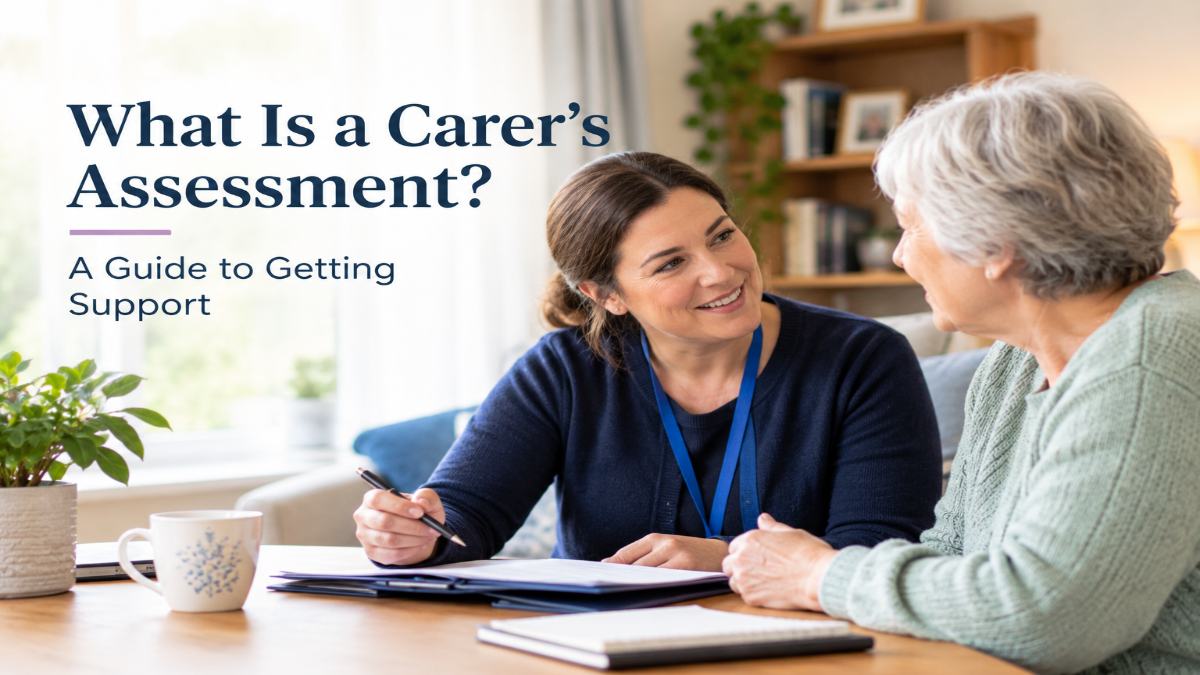
If you regularly look after someone who needs help because of illness, disability or another health condition, you may be entitled to support as a carer. A carer’s assessment looks at how your caring responsibilities affect your own life and what support could help.
You do not have to be a professional carer or live with the person you support to be considered a carer.
What Is a Carer’s Assessment?
A carer’s assessment is an assessment of your needs as someone providing unpaid care. It looks at the practical and personal impact of caring, including whether your responsibilities are affecting your health, work, relationships, sleep or ability to manage everyday life.
The assessment is usually arranged through your local council’s adult social care service.
A carers needs assessment is not about judging whether you are doing enough. It is an opportunity to explain what caring is like for you and identify support that could make your situation more manageable.
Check: Care Needs Assessment
Who Is Considered a Carer?
You may be a carer if you regularly provide unpaid help to a partner, parent, relative, friend or another person who needs support.
This could include:
- Helping someone with personal care or everyday tasks
- Preparing meals or helping with medication
- Taking someone to appointments
- Providing regular supervision or emotional support
- Helping someone manage because of dementia, illness or disability
You may still be a carer even if other family members, friends or professional care workers also provide support.
If you are unsure whether the term applies to you, it is worth asking your local council about a carer’s assessment rather than assuming you are not eligible.
Also Check: Types of Dementia
How Do I Get a Carer’s Assessment?
In England, you can contact your local council’s adult social care service and ask for a carer’s assessment.
You can explain that you provide unpaid care and would like an assessment of your own support needs.
Before the assessment, it can help to think about how caring affects your normal routine. You do not need to wait until you are struggling to ask for support.
Can I Have Someone With Me?
You can ask to have someone with you during the assessment if you would find that helpful. This could make it easier to explain your circumstances or discuss issues that you find difficult to raise on your own.
What Should I Prepare for a Carer’s Assessment?
There is no need to prepare a perfect account of everything you do. Instead, think about what has changed in your own life because of your caring responsibilities.
Consider:
- Are you getting enough sleep?
- Is your physical or mental wellbeing being affected?
- Are you able to work or study as you want?
- Can you maintain relationships and family commitments?
- Do you have enough time for yourself?
- Are you able to see friends or continue hobbies?
- Are the person’s care needs increasing?
- Do you feel able to continue providing the same level of care?
It can also help to write down the tasks you regularly carry out. This gives you a clearer picture of the amount of care you are providing.
What Happens During a Carer’s Assessment?
During a carer’s assessment, you will have the opportunity to explain what care you provide and how it affects your life.
The assessment may consider your health, daily routine, work or education, relationships, social activities and ability to continue caring.
You can also discuss what would make your situation easier.
The outcome should help identify whether you need additional information, services or other forms of support.
Check: How to Pay for a Care Home in the UK
What Is the Difference Between a Carer’s Assessment and a Care Needs Assessment?
A carer’s assessment and a care needs assessment look at two different people.
| Carer’s assessment | Care needs assessment |
|---|---|
| Looks at the needs of the unpaid carer | Looks at the needs of the person receiving care |
| Considers how caring affects your life | Considers what care and support the person needs |
| Can identify support for the carer | Can identify care and support for the individual |
| Can help with planning your future caring role | Can help determine appropriate care arrangements |
If the person you care for also needs additional support, they may benefit from their own care needs assessment.
Landona House Care Group has previously covered care needs assessments in more detail, including how they help identify the level and type of care an individual may require. Care Needs Assessment
The two assessments can therefore complement each other rather than replacing one another.
What Are the Possible Outcomes of a Carer’s Assessment?
The outcome depends on your circumstances and the support available through your local authority.
Depending on the assessment, you may receive information or help relating to:
- respite or short-break care
- equipment or practical support
- local carer support groups
- information and advice
- support with your caring role
- a support plan
- a personal budget or direct payment where applicable
An assessment does not automatically mean you will receive a particular service or payment. Support depends on your individual needs, eligibility and local arrangements.
Can a Carer’s Assessment Lead to Financial Support?
It can identify financial or practical support that may be relevant to your circumstances, but a carer’s assessment does not automatically result in a payment.
Some forms of financial support for carers have separate eligibility requirements. If money is becoming a concern, mention this during the assessment and ask what support or benefits you may be able to apply for.
It is important to distinguish between support identified through a carer’s assessment and benefits that have their own application and eligibility rules.
What If Caring Becomes Too Much?
Caring arrangements can change as someone’s condition or care needs change.
You may need to ask for further support if:
- your own health is suffering
- you are regularly losing sleep
- the person’s care needs have increased
- you are struggling to work or manage family responsibilities
- you no longer have time away from caring
- you are finding personal care increasingly difficult
- you are worried about whether the current arrangement is safe or sustainable
You do not have to wait until you reach breaking point before asking for help.
If the person you care for needs more support than you can reasonably provide, their care needs may also need to be reassessed. This could include considering additional home care, respite care or a suitable care home depending on their circumstances.
When Should You Have Another Carer’s Assessment?
Your circumstances are not fixed, so your support needs can change too.
It may be appropriate to ask about another assessment when the person’s condition changes, your caring responsibilities increase, your own health changes or existing support is no longer enough.
A carer’s assessment should be about your situation as it is now, not simply what it was when you first became a carer.
FAQs: Carer's Assessment
Find answers to common questions below
A carer's assessment looks at how providing unpaid care affects your own life and what support you may need to continue caring.
Yes. A carer's assessment looks at your needs as a carer. The person you care for can have a separate care needs assessment if they require one.
Yes. You can ask to have someone with you if this would help you explain your circumstances or take part in the assessment.
It may identify financial or practical support that could be relevant, but completing an assessment does not automatically guarantee a payment. Some benefits have separate eligibility requirements.