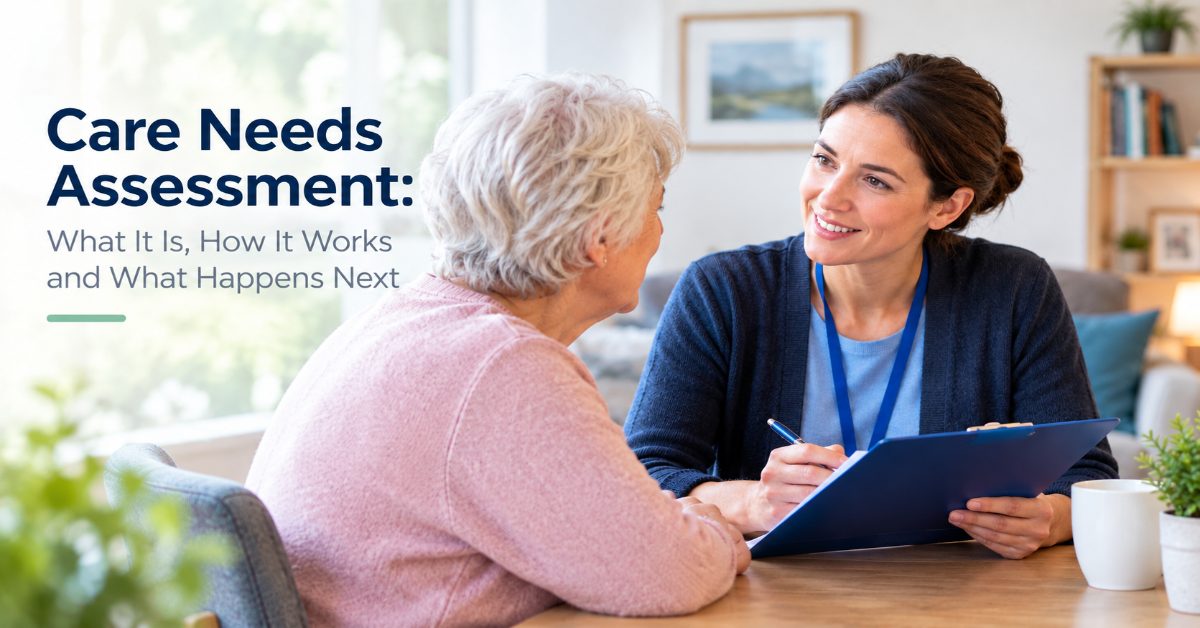
If you or someone you care for is finding it harder to manage everyday life, a care needs assessment can help identify what support may be appropriate.
In England, the assessment is carried out by the local authority’s adult social care service. It looks at how a person’s needs affect their everyday life, wellbeing and ability to achieve the things that matter to them. The assessment can help identify whether support at home, adaptations, community services or a move into a care home may be appropriate.
Having an assessment does not automatically mean that someone needs to move into a care home. It is about understanding the person’s circumstances first and then considering the most appropriate ways to meet their needs.
What Is a Care Needs Assessment?
A care needs assessment is an assessment of the help and support an adult may need with everyday life.
It is carried out by the local authority and is designed to build a clear picture of the person’s circumstances rather than simply deciding which service they should receive.
The assessment considers:
- what the person can do independently
- where they are finding things difficult
- how their needs affect their wellbeing
- what they want to achieve
- what support they already receive
- whether family, friends or other people are providing help
- whether changes to their current arrangements could help
The assessment should consider the person’s needs as a whole. Under the Care Act, local authorities must assess an adult who appears to need care and support, regardless of their financial circumstances or whether the council initially believes they will meet the eligibility criteria.
You may also hear the process referred to as a care assessment, social care assessment, adult social care assessment or a Care Act assessment.
Who Can Ask for a Care Needs Assessment?
A care needs assessment may be appropriate when an adult is struggling with everyday activities or when their care and support needs have changed.
For example, someone may need an assessment after:
- a change in their mobility
- an illness or injury
- increasing difficulty managing personal care
- repeated falls or safety concerns
- changes in memory or cognitive ability
- difficulty preparing meals or managing medication
- increasing reliance on family members
- a change in their ability to live safely at home
A family member or carer can also raise concerns with the local authority. The assessment should involve the person receiving care and, where appropriate, a carer or another person they want involved. If someone has difficulty taking part or communicating their needs, additional support or advocacy may be available.
Unpaid carers can also request a separate carer’s assessment to consider the effect that caring responsibilities are having on them.
How Do You Get a Care Needs Assessment?
The usual starting point is the adult social care department of your local council.
You can contact the council and ask for a care needs assessment. NHS guidance confirms that the assessment is free and that anyone can ask for one if they believe they need help managing day-to-day life.
Depending on the local authority and individual circumstances, the assessment may take place:
- face to face
- over the telephone
- online
- through a self-assessment process
If you are unsure which council to contact, your local authority’s adult social care service can explain the process.
It is worth being as clear as possible when making the request. Saying that someone is “struggling” may not give the council enough information to understand the situation. Explain what they are struggling with and how this affects everyday life.
For example:
“They now need help getting dressed each morning and cannot safely use the stairs without someone nearby.”
Specific examples give a clearer picture of the person’s care needs.
What Happens During a Care Needs Assessment?
The assessor will look at how the person manages everyday activities and what support would help them maintain their independence and wellbeing.
A physical needs assessment may consider areas such as mobility, personal care and managing safely at home. The assessment can also consider social, emotional and practical needs.
Questions may cover:
- washing and bathing
- getting dressed
- using the toilet
- eating and drinking
- preparing meals
- taking or managing medication
- getting around the home
- going outside safely
- maintaining a safe home
- communicating with other people
- maintaining relationships
- taking part in work, education or social activities
- managing existing support
- emotional wellbeing and loneliness
The assessor should also consider what the person wants to achieve, rather than looking only at what they cannot do.
For example, someone may want to continue visiting friends, attending a place of worship or going shopping independently. These goals can form an important part of understanding what support may be useful.
The assessment should also consider the wider circumstances, including where the person lives and what help they already receive from family, friends or other people.
Also Read: How Much Does a Care Home Cost
What Questions Are Asked in a Care Needs Assessment?
There is no single list of questions that applies identically to everyone. The questions should reflect the person’s individual circumstances.
Questions about daily activities
You may be asked:
- Can you wash and dress yourself?
- Do you need help getting out of bed?
- Can you prepare and eat meals?
- Can you manage household tasks?
- Can you use the toilet independently?
Questions about mobility and safety
The assessor may ask about:
- walking around the home
- using stairs
- falls
- getting in and out of chairs or bed
- using mobility equipment
- leaving the home safely
Be honest about difficulties rather than describing what you can do on your best day if your ability varies.
Questions about medication and personal care
You may be asked whether you can manage medication, personal hygiene and other aspects of personal care independently.
If another person already helps with these tasks, explain what they do and how often they provide support.
Questions about support at home
The assessor may ask who currently helps you and whether that support is sustainable.
This might include:
- a partner
- children
- relatives
- friends
- unpaid carers
- existing professional care services
Questions about wellbeing and social needs
The assessment is not only about physical tasks.
You may also discuss relationships, social activities, emotional wellbeing, maintaining independence and the things you want to continue doing.
This person-centred approach is part of the Care Act assessment process.
How Should You Prepare for a Care Needs Assessment?
Preparation can make it easier to explain what is happening, particularly if you are discussing the needs of a parent or relative.
Before the assessment, make a note of:
- tasks that have become difficult
- tasks where help is already being provided
- changes in mobility or independence
- recent falls or safety concerns
- medication support
- personal care needs
- changes in eating or drinking
- support provided by family or friends
- existing professional care
- what the person would like to continue doing
It can also help to keep a short record over several days if needs fluctuate.
For example, someone may manage reasonably well in the morning but require considerably more support later in the day. Giving the assessor an accurate picture of typical days can help them understand the person’s needs more fully.
If appropriate, a family member, friend or carer can be involved in the assessment. NHS guidance also recommends having someone with you if you are not confident explaining your circumstances yourself.
What Happens After a Care Needs Assessment?
After the assessment, the local authority considers whether the person has eligible needs under the national eligibility framework.
The decision is based on the person’s assessed needs, the impact those needs have on wellbeing and whether the relevant eligibility criteria are met.
The outcome does not automatically mean that the council will arrange a care home place.
Depending on the person’s circumstances, support could include:
- help from a paid carer at home
- equipment or adaptations
- day services
- community support
- respite support
- residential care
- nursing care
If the local authority is going to meet eligible needs, a care and support plan should set out how those needs will be addressed.
A financial assessment may also be carried out to establish whether the person needs to contribute towards the cost of care. The financial assessment is separate from the assessment of care needs.
Does a Care Needs Assessment Mean You Need a Care Home?
No.
A care needs assessment is not a care-home admission assessment. Its purpose is to understand the person’s needs and determine what support may be appropriate.
Someone may be able to remain at home with:
- home care
- equipment or adaptations
- support from family
- community services
- day care
- respite care
For some people, however, the assessment may highlight that managing safely at home has become increasingly difficult or that a higher level of ongoing support is needed.
At that point, residential or nursing care may become one of the options worth considering.
When Might Residential or Nursing Care Be Considered?
Residential care may be considered when an older person needs regular help with personal care and everyday activities and would benefit from living in a supportive care-home environment.
Nursing care may be appropriate when someone has additional nursing or clinical needs requiring support from qualified nurses.
The distinction matters because the right setting depends on the person’s actual needs rather than simply their age or diagnosis.
For families considering a care home, the provider will normally carry out its own assessment before admission. This is different from the local authority’s care needs assessment. A care provider needs to understand the person’s health, mobility, medication, personal care requirements, routines and preferences to establish whether the home can safely meet those needs.
Landona’s care homes use individual assessments and care planning to understand the support a resident requires. For example, its homes may assess areas such as mobility, medication, nutrition, personal care and individual routines before admission.
What Is a Care Plan?
A care plan sets out how a person’s identified care and support needs will be met.
It should reflect the individual rather than simply listing a set of standard services.
A care plan can include:
- what matters to the person
- what they can do independently
- the support they need
- equipment or other assistance
- who is involved in their care
- how and when support will be provided
- important preferences and routines
- relevant contact information
NHS guidance explains that care and support plans should reflect the person’s circumstances, preferences and required support, and should be reviewed to make sure they continue to meet changing needs.
This is also important when someone moves into a care home. A care home care plan should give staff a clear understanding of the person’s needs, preferences, routines and the support they require.
At Landona House Care Group, families are encouraged to contribute to care planning so that individual wishes and choices are considered alongside their care needs.
What If the Assessment Says You Need More Support?
If you disagree with the outcome of your assessment, or believe important needs have not been properly considered, you can raise your concerns with the local authority.
Start by asking the council to explain its decision and discuss the areas you believe have been missed.
If you remain unhappy, you can use the council’s formal complaints procedure. NHS guidance confirms that people have the right to complain about how a needs assessment was carried out or about its outcome.
It can be helpful to explain your concerns with specific examples rather than simply saying that you disagree.
For example, explain how often help is required, what happens without that help and how the situation affects the person’s safety, independence or wellbeing.
Getting Help to Understand Your Care Options
A care needs assessment is often the beginning of a wider conversation about what support will work best.
If the assessment shows that additional support is needed, families can consider the options available based on the person’s circumstances. This might mean arranging care at home, using respite care or exploring residential or nursing care.
If a move into a care home is being considered, it is sensible to speak directly with potential providers about the person’s needs and ask how those needs would be supported.
Landona House Care Group provides residential care, nursing care, dementia care and respite care, with individual care planning based on residents’ needs and preferences.
For families supporting someone living with dementia, our guide on when to consider a dementia care home can help explain some of the signs that additional support may be needed.
If temporary support is needed while a family carer takes a break, our guide to what respite care is explains how short-term care can work and when it may be useful.
The important point is that there is no single care option that is right for everyone. Understanding the person’s needs first makes it easier to compare the available choices and decide what level of support is appropriate.