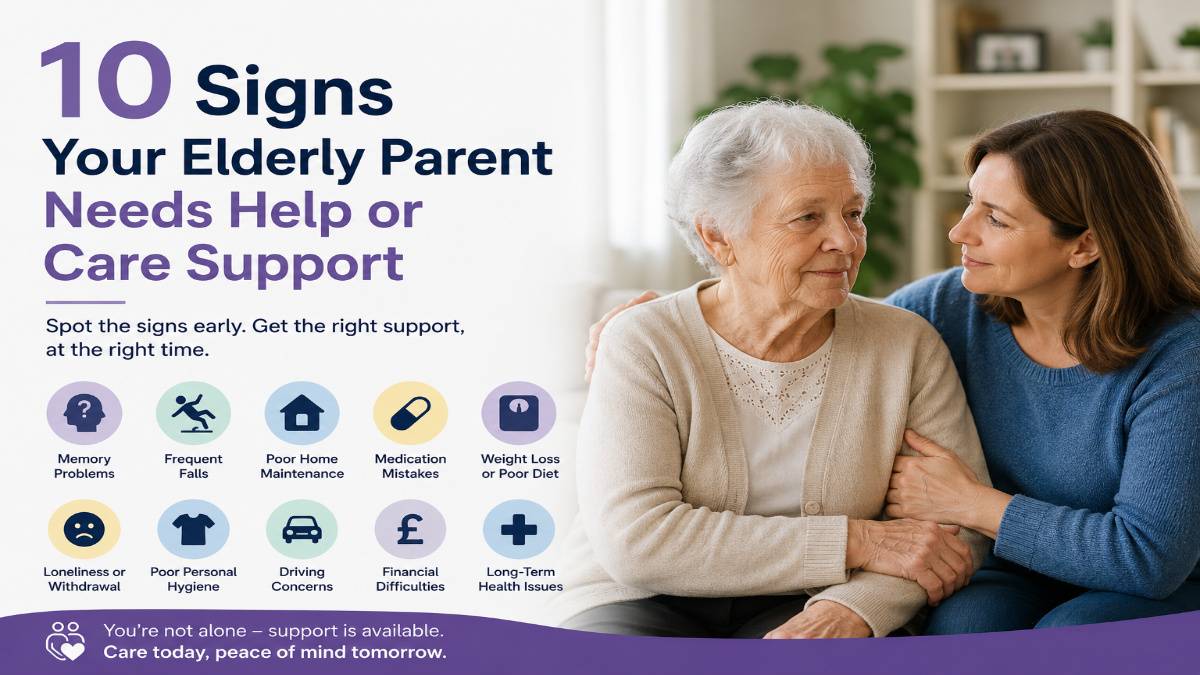
Noticing changes in an ageing parent can be difficult, especially when those changes happen gradually.
Many families only realise support is needed after a fall, missed medication, or hospital visit. In most cases, the warning signs appear much earlier.
Understanding the signs your elderly parent needs help allows you to take action before daily life becomes unsafe or overwhelming.
Signs Your Elderly Parent Needs Help With Daily Living
Difficulty managing everyday tasks is often the first sign that extra support is needed.
Struggling with cooking and household tasks
A parent who once managed everything independently may begin:
- Leaving dishes unwashed
- Forgetting meals
- Wearing unclean clothes
- Ignoring household cleaning
These changes often suggest daily living is becoming harder to manage safely.
Also Read: What Is Residential Care?
Poor personal hygiene and self neglect
One of the clearest signs an elderly parent needs care support is a decline in personal hygiene.
Common signs include:
- Body odour
- Unwashed hair or clothes
- Difficulty bathing
- Neglected grooming
Missed medication and forgotten appointments
Medication mistakes are common when memory or routine starts to decline.
Signs include:
- Unused tablets piling up
- Taking the wrong dose
- Missing GP or hospital appointments
At this stage, some families begin considering structured support through residential care homes UK or part-time care options.
Signs Your Elderly Parent Needs Dementia Care Support
Memory-related symptoms are one of the biggest reasons families begin exploring long term care.
Memory loss and repeated confusion
Occasional forgetfulness is normal. Repeated confusion is not.
Warning signs include:
- Repeating the same questions
- Forgetting familiar names
- Getting lost in familiar places
- Confusion about time or routine
These symptoms often lead families to explore dementia care homes UK that provide specialist memory support.
Behaviour and mood changes
Changes in mood can sometimes appear before a formal dementia diagnosis.
Common changes include:
- Anxiety or agitation
- Irritability
- Withdrawal from family
- Sudden personality changes
Signs Your Elderly Parent Needs Residential Care
As care needs increase, independent living may no longer be safe.
Increased falls and mobility problems
Falls are one of the most common reasons older adults lose independence.
Warning signs include:
- Difficulty standing up
- Holding furniture while walking
- Poor balance
- Unexplained bruises
When mobility problems increase, families often begin researching care homes UK that can provide safer daily support.
Isolation and withdrawal from social life
Older adults who stop seeing friends, attending activities, or leaving the house may be struggling physically or emotionally.
Loneliness can affect:
- Mental wellbeing
- Confidence
- Physical health
- Cognitive decline
Supportive environments in care homes in Widnes or care homes in Middlesbrough can help older adults regain social interaction and routine.
Poor nutrition and dehydration
Changes in eating and drinking habits are often overlooked.
Signs include:
- Empty fridge or expired food
- Sudden weight loss
- Lack of appetite
- Signs of dehydration or tiredness
According to the NHS, dehydration is more common in older adults and can increase confusion, weakness, and risk of falls.
Also Read: How to Pay for a Care Home in the UK
Signs Your Parent May Need More Than Home Support
You may need to consider residential care if:
- Safety at home is becoming a concern
- Daily support is needed throughout the day
- Dementia symptoms are progressing
- Family caregivers are overwhelmed
Many families begin by comparing local options such as:
Choosing nearby care allows regular visits and stronger family involvement.
Residential Care vs Nursing Care: What Is the Difference
Understanding the difference helps families choose the right support.
Residential care
- Daily support and supervision
- Help with washing, dressing, and meals
- Suitable for mild to moderate care needs
Nursing care
- Includes medical supervision
- Suitable for complex health conditions
- Managed by qualified nursing staff
Families needing medical support may explore services such as residential care homes UK.
FAQs About Signs an Elderly Parent Needs Help
Early signs include memory problems, poor hygiene, missed medication, falls, and difficulty managing daily tasks.
Frequent falls, confusion, self neglect, and medication mistakes are strong signs independent living may no longer be safe.
Residential care should be considered when support is needed throughout the day and safety becomes difficult to manage at home.
Residential care supports daily living, while dementia care includes specialist support for memory-related conditions and behavioural changes.